Tell us about your nanoparticle or RNA project and request Ntensify® micro and mini demo Our team will get back to you shortly to schedule your session.
Loading specific message...
Contact
Any inquiries about RNA synthesis systems? Drop us a line!
Loading specific message...
Contact
Any inquiries about your nanoparticle/RNA-LNP formulation? Drop us a line!
Loading specific message...
Contact
Any inquiries about your nanoparticle/RNA-LNP formulation? Drop us a line!
Loading specific message...
Book a demo
Tell us about your nanoparticle or RNA-LNP project and request a TAMARA demonstration. Our team will get back to you shortly to schedule your session.
Last modified: 17/07/2026 - Written by: Sezen Gul, PhD - RNA-LNP & Nanoparticles Formulation Expert
NanoThera Summit 2025 introduction
We were on the ground at NanoThera Summit 2025 in Valencia (8–10 September), surrounded by pioneering researchers and industry experts pushing the boundaries of nanomedicine and targeted drug delivery. For us, the key themes that stood out were the innovations on lipid nanoparticle (LNP) and polymeric nanoparticle (PNP) systems, emerging PEG-replacement strategies, and advanced analytical characterization methods — redefining nanoparticle performance, quality, safety, and scalability. Three days later, we left with full of insights — and we’re excited to share them. Let’s dive into the highlights below!
Date of the event: Sep. 08 to 10, 2025Where: Valencia, Span
Key takeaways and general observations from NanoThera 2025
Across three packed days, one theme stood out: nanoparticle design is now guided by immune-conscious engineering. At the center of many discussions was polyethylene glycol (PEG), the long-standing ‘stealth’ polymer widely used in nanomedicines for its low protein binding and ability to prolong circulation time — yet despite these advantages, PEG can trigger anti-PEG antibodies, leading to accelerated clearance and, in some cases, hypersensitivity reactions. This challenge is fueling a wave of next-generation PEG-replacement strategies entering R&D and even early clinical pipelines. Promising alternative shielding technologies highlighted at the summit include polysarcosine (pSar), poly(2-oxazoline) (POx), zwitterionic polymers such as polycarboxybetaine (PCB), oligoglycerol lipids, and glycodendrons — designed to achieve stealth while minimizing immune recognition.
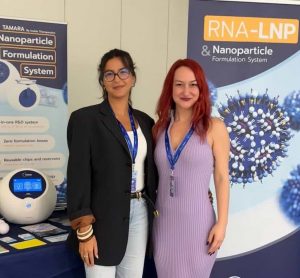
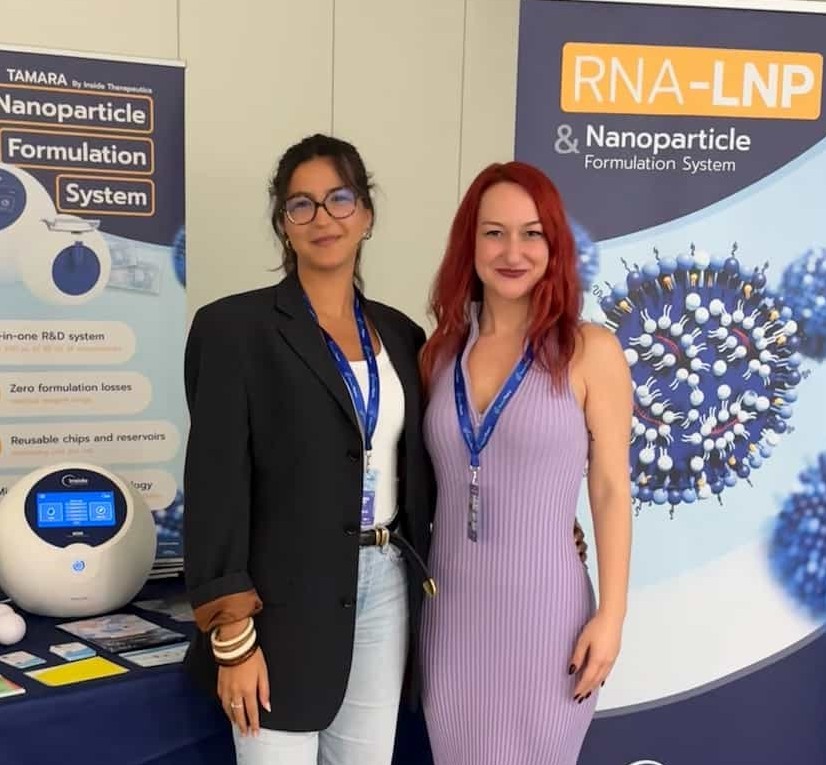
Figure 1. Yasmine and Sezen at NanoThera Summit 2025, networking and participating in scientific discussions on next-generation nanotherapeutic platforms.
At the same time, the conference reinforced that fully understanding RNA-LNPs requires orthogonal analytical characterization. Techniques highlighted included SAXS (Small-Angle X-ray Scattering) and SANS (Small-Angle Neutron Scattering) to analyze internal structure, AF4 (Asymmetric Flow Field-Flow Fractionation)coupled with MALS (Multi-Angle Light Scattering) to assess size distribution and population heterogeneity, 2D chromatography (Two-Dimensional Chromatography) to evaluate RNA encapsulation, integrity, and lipid composition, and nanopore sequencing to confirm nucleic acid identity and integrity. Together, these tools provide a comprehensive view of the critical quality attributes (CQAs) that determine LNP stability and biological performance.
Selected presentation highlights from NanoThera 2025
We curated presentations that resonate with our focus areas — from lipid/polymer nanoparticle innovations and next-generation RNA therapies to advanced analytics. Below are the key findings and takeaways from the selected talks we followed during the summit.
Anti-PEG antibody induction mechanism is formulation-dependent [1]:
PEG–protein conjugates => T-cell dependent
PEG–liposomes => T-cell independent
PEG–mRNA vaccine formulations => both T-cell dependent & independent
Strategies for designing next-generation stealth polymers include tuning the hydration layer around polymer chain, restricting polymer chain mobility, and increasing polymer thickness.
Polycarboxybetaine (PCB) as PEG alternative:
Larger polymer cross-sectional area
Non-antigenic in protein conjugates, but still immunogenic on liposomes [2], [3]
Figure 2. Structure of polycarboxybetaine (PCB), a zwitterionic polymer under investigation as a PEG substitute.
Conclusions:
Near-true stealth can be achieved for ~10 nm particles using polymers like PCB, while larger ~100 nm systems (e.g., LNPs) are more complex due to multivalency effects, yet still should be accessible through effective polymer engineering.
There is a need for quantitative assays to define stealth for nanoparticles.
Polypept(o)ides: From novel materials to therapies (Matthias Barz, LACDR-Leiden University)
Polysarcosine (pSar, or poly(N -methyl glycine)) is a polymer derived from the naturally occurring amino acid sarcosine. It is hydrophilic, non-ionic, and displays stealth-like properties similar to PEG. [4]
Polypept(o)ides are a class of block copolymers that merge the versatile functionality and inherent stimuli-responsiveness of synthetic polypeptides with the stealth-like characteristics of polypeptoid polysarcosine. [4], [5]
Note: Polypeptoids differ from polypeptides because their backbone amide nitrogens are N-substituted—that is, the hydrogen normally present on the nitrogen is replaced by a side chain. This makes them act only as hydrogen bond acceptors and prevents them from forming regular secondary structures like α-helices or β-sheets. [4], [5]
Figure 3. Representation of polypept(o)ides, along with possible polymer architectures, corresponding nanocarrier systems, and representative therapeutic applications. [5]
Polypept(o)ides are increasingly covered by patent filings for pharmaceutical use, including next-generation RNA vaccine applications (e.g., pSar-containing RNA-LNPs show reduced cytokine release and lower complement activation).
RNA-LNP quality control methods (Sven Even F. Borgos, SINTEF)
Early batch sizing tools like DLS (Dynamic Light Scattering) and NTA (Nanoparticle Tracking Analysis) provide quick, low-resolution insights as a first assessment. Higher-complexity, orthogonal methods—e.g., AF4 (Asymmetric Flow Field-Flow Fractionation) coupled with MALS (Multi-Angle Light Scattering), or AUC (Analytical Ultracentrifugation)—significantly improve resolution and can reveal multiple size populations in polydisperse samples. [6]
RNA-focused analytics such as nanopore sequencing enable simultaneous evaluation of identity, integrity/length, and concentration of nucleic acids while 2D-LC (2-Dimensional Liquid Chromatography) enable simultaneous determination of encapsulation efficiency (EE%), nucleic acid integrity, lipid-RNA adducts, and LNP size.
Biological potency and cytotoxicity testing adds another QC dimension [6]
Table 1. Comparative overview of complementary analytical techniques used in nanoparticle quality control, highlighting their roles in assessing physical properties, internal structure, morphology, and RNA loading. [6]
Unveiling solid tumor microenvironment for nano-immunotherapies (Helena F. Florindo, iMed University Lisboa)
Two complementary immunotherapy strategies: Cancer immunotherapy can either inhibit negative immune checkpoints (e.g., PD-1 blockade) or actively stimulate immune signaling pathways (e.g., OX40 co-stimulation) to enhance T-cell–mediated antitumor responses.
Need for combinatorial approaches: While immune checkpoint therapies have demonstrated clinical benefits, their effectiveness and durability are often restricted by tumor resistance or relapse. Higher levels of tumor-infiltrating lymphocytes are linked to improved outcomes, suggesting that strategies boosting antigen presentation and T-cell priming could enhance therapy efficacy.
Dendritic cell (DC) targeting: Delivering tumor-associated antigens directly to DCs could promote efficient antigen presentation and T-cell priming (via MHC-I and MHC-II to activate CD8+ cytotoxic T cells and CD4+ T helper cells, respectively).
Nanoparticle-based vaccine design for cancer therapy: Biodegradable PLGA/PLA NPs (polylactic-co-glycolic acid/poly-lactic acid nanoparticles), both non-mannosylated and mannosylated, were developed to co-deliver melanoma-associated antigens and TLR agonists (CpG, MPLA) to dendritic cells via passive and active targeting. [8]
Combination therapy with mannosylated nanovaccines, αPD-1/αOX40, and ibrutinib (inhibitor of myeloid-derived suppressor cells [MDSCs]) markedly enhances antitumor efficacy, leading to prolonged survival. [8]
Figure 4. Mannosylated PLGA/PLA nanoparticles, engineered to co-deliver melanoma-associated antigens (Melan A/MART-1 peptide) and Toll-like receptor agonists (CpG, MPLA) to dendritic cells for targeted cancer therapy. [8]
Novel bioresponsive peptide NPs for nucleic acid modalities (Anand Subramony, Eli Lilly & Company)
LNP components and immune interactions: Every lipid component within an LNP formulation can potentially stimulate immune response, stemming from specific lipid structural properties. This highlights the need for immunogenicity-focused, formulation-specific design. [9]
Next-generation nanocarriers are built to overcome liver tropism, prevent nonspecific protein interactions, enable specific cellular uptake via targeting, and actively trigger endosomal escape through responsive designs.
Branched peptide dendrimer structures could offer multi-functional delivery solutions, enabling delivery through: (1) targeting ligand for cellular uptake, (2) stealth layer for immune shielding and stability, (3) peptide dendrons for nucleic acid binding, intracellular trafficking, and endosomal escape. [10]
Like staying up to date? So do we.
Join the newsletter for the newest Reviews.
Engineering the invisible: LNPs and glycoconjugates for next-gen therapeutics (Pierre-Alexandre Driguez, Sanofi)
PEG-replacement by GlycoDendrons (GD): GD molecules built on a lipid tail – spacer – dendron – sugar architecture are being explored as alternatives to PEG for nanoparticle shielding.
Design variables tested: Libraries of GD candidates investigated differences in lipid tails (DSG/DMG), spacer length, and number of sugars to map stability and immune response across species.
GDs could allow formulation of stable and potent LNPs without PEG lipids.
Further discussions from NanoThera 2025
Additional formulation and distribution challenges centered on:
Eliminating cold-chain dependency to expand global vaccine access—where post-loading RNA into pre-formed, empty LNPs was debated as a potential strategy
Achieving non-liver targeting of LNPs: PEG-lipids with varying alkyl chain lengths (C14, C16, C18) were discussed in the context of membrane anchoring and shedding, along with “smart” PEG layers designed to enhance cellular uptake and promote endosomal escape.
Several talks emphasized the use of new ionizable, helper, and non-PEG lipid components to tailor next-generation mRNA-LNP vaccines, while advances in polymer-based nanoparticle platforms also emerged as a strong direction for nucleic acid delivery.
The potential of self-amplifying RNA (saRNA) was highlighted as a promising approach to improve vaccine potency.
Other talks added extra momentum with topics including emerging delivery strategies such as Janus-like nanoparticles, lung- and spleen-targeted mRNA-LNPs with SORT lipids, and scaling production of RNA/DNA LNPs.
References
[1] Y. Liu et al., “The strategy used by naïve anti-PEG antibodies to capture flexible and featureless PEG chains,” Journal of Controlled Release, vol. 380, pp. 396–403, Apr. 2025, doi: 10.1016/j.jconrel.2025.02.001.
[2] M. Najmina et al., “A Stealthiness Evaluation of Main Chain Carboxybetaine Polymer Modified into Liposome,” Pharmaceutics, vol. 16, no. 10, Oct. 2024, doi: 10.3390/pharmaceutics16101271.
[3] T. Ryujin et al., “Blood retention and antigenicity of polycarboxybetaine-modified liposomes,” Int J Pharm, vol. 586, Aug. 2020, doi: 10.1016/j.ijpharm.2020.119521.
[4] K. Klinker and M. Barz, “Polypept(o)ides: Hybrid Systems Based on Polypeptides and Polypeptoids,” Macromol Rapid Commun, vol. 36, no. 22, pp. 1943–1957, Nov. 2015, doi: 10.1002/marc.201500403.
[5] T. A. Bauer, L. Simić, J. F. R. Van Guyse, A. Duro-Castaño, V. J. Nebot, and M. Barz, “Polypept(o)ides – Origins, synthesis, applications and future directions,” Nov. 01, 2024, Elsevier Ltd. doi: 10.1016/j.progpolymsci.2024.101889.
[6] J. Parot et al., “Quality assessment of LNP-RNA therapeutics with orthogonal analytical techniques,” Journal of Controlled Release, vol. 367, pp. 385–401, Mar. 2024, doi: 10.1016/J.JCONREL.2024.01.037.
[7] C. G. Simon et al., “Orthogonal and complementary measurements of properties of drug products containing nanomaterials,” Journal of Controlled Release, vol. 354, pp. 120–127, Feb. 2023, doi: 10.1016/j.jconrel.2022.12.049.
[8] J. Conniot et al., “Immunization with mannosylated nanovaccines and inhibition of the immune-suppressing microenvironment sensitizes melanoma to immune checkpoint modulators,” Nat Nanotechnol, vol. 14, no. 9, pp. 891–901, Sep. 2019, doi: 10.1038/s41565-019-0512-0.
[9] S. P. Chen and A. K. Blakney, “Immune response to the components of lipid nanoparticles for ribonucleic acid therapeutics,” Curr Opin Biotechnol, vol. 85, p. 103049, Feb. 2024, doi: 10.1016/J.COPBIO.2023.103049.
[10] M. A. Urello et al., “Intracellular Nanodelivery of DNA with Enzyme-Degradable and pH-Responsive Peptide Dendrons,” Biomacromolecules, vol. 26, no. 6, pp. 3410–3422, Jun. 2025, doi: 10.1021/acs.biomac.5c00013.
Date of the event: Sep. 08 to 10, 2025Where: Valencia, Span
Looking to get started or improve your LNP formulation screening?
Reach out to us to discover how we can help!
Other Conference Recaps
Looking for more insights from conferences? Check out other conference recaps to stay updated on the latest developments!








![Figure 3. Representation of polypept(o)ides, along with possible polymer architectures, corresponding nanocarrier systems, and representative therapeutic applications. [5]](https://insidetx.com/wp-content/uploads/2026/01/Figure3_Polypeptoides.png)
![Table 1. Comparative overview of complementary analytical techniques used in nanoparticle quality control, highlighting their roles in assessing physical properties, internal structure, morphology, and RNA loading. [6]](https://insidetx.com/wp-content/uploads/2026/01/Table1_QC-methods.png)
![Figure 4. Mannosylated PLGA/PLA nanoparticles, engineered to co-deliver melanoma-associated antigens (Melan A/MART-1 peptide) and Toll-like receptor agonists (CpG, MPLA) to dendritic cells for targeted cancer therapy. [8]](https://insidetx.com/wp-content/uploads/2026/01/Figure2_Mannosylated-PLGA-PLA-NPs.png)