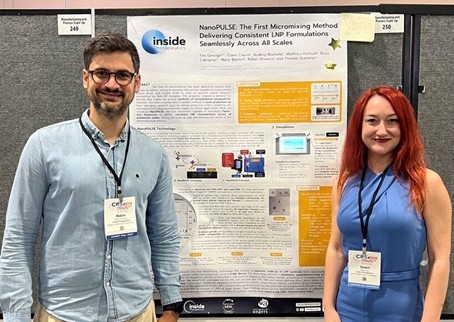
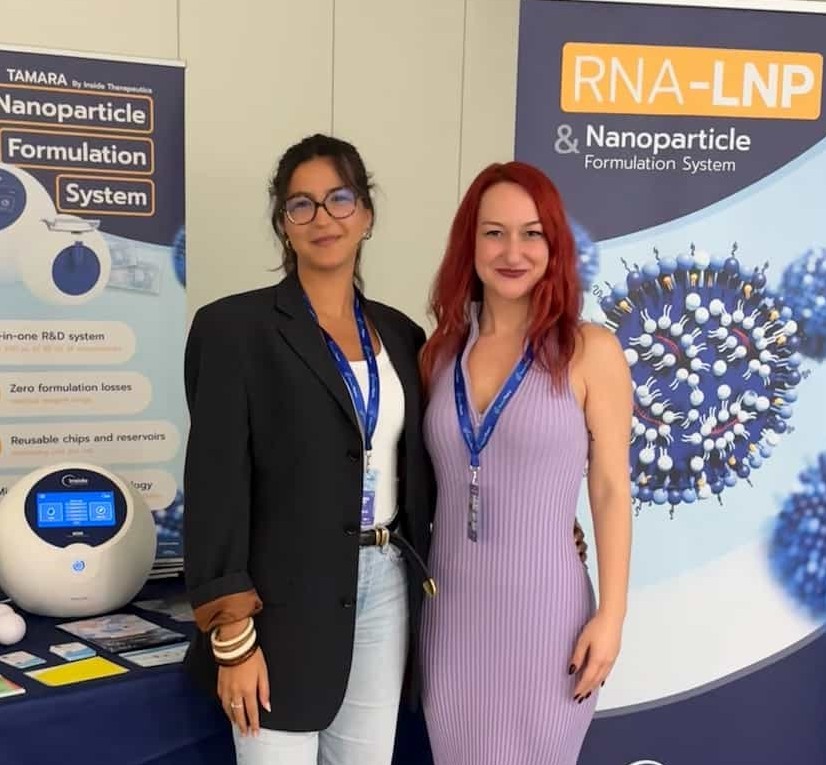
We were thrilled to attend the 13th International mRNA Health Conference in Berlin, November 10–13, 2025! Over three days, leading academia and industry experts shared the latest breakthroughs in mRNA science—from cutting-edge vaccines and therapeutics to innovations in delivery and gene editing. The event was packed with inspiring scientific presentations, lively discussions, and plenty of opportunities to connect with the mRNA community. Here’s a closer look at the insights that caught our attention.
Date of the event: Nov. 10 to 13, 2025Where: Berlin, Germany
Key takeaways from mRNA Health Conference 2025
Across the conference, one message was clear: lipid nanoparticles remain the most widely used and clinically validated delivery system for RNA therapeutics. As mRNA applications continue to expand beyond vaccines into gene editing, immunotherapy, and chronic disease treatment, the spotlight is increasingly on delivery performance, scalability, and control.
A recurring theme was the importance of designing best-in-class mRNA–LNP therapeutics—achieving the right level of protein expression, controlled immune activation, manufacturing compatibility, formulation stability, and tissue-specific expression to successfully translate mRNA platforms into patients. These parameters are no longer considered independently but as part of an integrated design space spanning RNA sequence, lipid chemistry, formulation, and process development.
Overall, the discussions reflected a field that is steadily evolving toward more refined, scalable, and clinically relevant RNA–LNP platforms.
Hot topics from mRNA Health Conference 2025
Across the sessions we followed, recurring themes emerged throughout the conference:
mRNA therapeutics are clearly moving beyond vaccines, with exciting progress in gene editing, cancer immunotherapy, rare diseases, and immune modulation for autoimmune conditions.
LNP delivery is expanding beyond the liver, with increasing focus on targeted and tissue-specific delivery to immune cells, secondary lymphoid organs, germ cells, central nervous system, and other extra-hepatic tissues.
Formulation design is becoming a powerful immunomodulatory tool, as lipid chemistry and mRNA engineering are increasingly used to fine-tune efficacy, durability, and tolerability.
Self-amplifying RNA and novel RNA formats continue to gain traction as approaches to improve potency while reducing dose.
AI-driven tools and advanced imaging technologies are transforming how delivery systems are designed and evaluated, enabling single-cell resolution insights and more predictive development strategies.
Selected presentation highlights
Below, we share highlights and takeaways from a selection of talks that we found particularly relevant during the 13th international mRNA health conference.
Keynote: Cellular therapies for immune reset in autoimmune diseases (Georg Schett)
CAR-T cell therapies are emerging as a powerful approach for immune reset in autoimmune diseases, enabling inducible and reversible B-cell depletion.
CD19- and BCMA-targeted CAR-T cells induce a short interval of B cell depletion, followed by gradual immune reconstitution.
Therapeutic applications of CD19 CAR-T cells include systemic lupus erythematosus (SLE), systemic sclerosis, inflammatory myopathies, and refractory myasthenia gravis.
Key associated toxicities include cytokine release syndrome (CRS), immune effector cell–associated neurotoxicity syndrome (ICANS), and a newly described local immune effector cell–associated toxicity syndrome (LICATS) affecting previously inflamed organs.
Importantly, in vivo CAR approaches using targeted LNPs delivering CAR mRNA (e.g., CD19 CAR mRNA) offer a promising strategy to simplify CAR-T therapies and improve accessibility. [1]
Like staying up to date? So do we.
Join the newsletter for the newest Reviews.
Genetic engineering of therapeutic cells: challenges and solutions (Zoltan Ivics)
While ex vivo CAR-T therapies are highly effective, they remain constrained by high costs, complex manufacturing, and limited patient access, making in vivo CAR-T approaches a compelling next step.
The Sleeping Beauty (SB) transposon system is a non-viral gene delivery platform enabling stable genomic integration and sustained transgene expression (via a transposon carrying the gene of interest and a transposase enzyme). [2]
SB vectors can be delivered as plasmid or minicircle DNA, with the transposase supplied as DNA, mRNA, or protein, offering flexibility in system design.
Importantly, SB components can be encapsulated in lipid nanoparticles (LNPs), enabling in vivo delivery of a minicircle CD19 CAR transposon together with transposase mRNA, resulting in efficient CAR-T cell generation and potent antitumor activity. [3]
Compared to lentiviral vectors, SB shows a more favorable genotoxicity profile, as its random integration avoids the bias toward actively transcribed genomic regions.
Figure 1. (a) The Sleeping Beauty transposon system. [2] (b) An example of targeted LNP platform for T cell engineering. [3]
Distinct components of mRNA vaccines cooperate to instruct efficient immune response (Michela Locci)
mRNA–LNP vaccines act through a dual adjuvant mechanism, where both the mRNA and the lipid nanoparticle contribute distinct immune signals.
Nucleoside-modified mRNA induces type I interferon responses that act on dendritic cells (DCs), shaping T follicular helper (Tfh) cell and B-cell responses.
Lipid nanoparticles actively instruct DCs by driving a Tfh-cell–inducing transcriptional program, enhancing germinal center formation and antibody responses.
Optimal germinal center responses require both components together, highlighting that LNPs are not passive carriers but active immunological modulators.
Figure 2. Dual adjuvant mechanism of mRNA–LNP vaccines. [4]
Chemical evolution of carriers for RNA delivery and genome editing (Ernst Wagner)
Endosomal escape remains a major bottleneck in nucleic acid delivery, with only ~1–2% of internalized cargo typically reaching the cytosol, highlighting the need for improved carrier chemistries.
Lipo-xenopeptides (LAF-XP) were introduced as double pH-responsive delivery components, combining cationizable polar aminoethylene units with apolar lipo-amino fatty acids to enhance endosomal disruption.
Overall, LAF-XP carriers formulated as LNPs represent a promising alternative to conventional ionizable lipids, particularly for immune-focused and extra-hepatic RNA delivery applications. [5]
Figure 3. Double pH-responsive LAF-XPs. [5]
AI-powered single-cell targeting of mRNA therapeutics with whole-body imaging (Ali Ertürk)
Advanced transparency imaging enables high-resolution, whole-mouse body visualization at single-cell resolution, allowing unbiased and automated quantification across all organs.
The SCP-Nano (Single-Cell Precision Nanocarrier Identification) platform combines experimental imaging with deep-learning analysis to map nanocarrier biodistribution throughout the body.
SCP-Nano can detect LNP tissue distribution patterns at extremely low doses (down to 0.0005 mg/kg), far below the sensitivity of conventional whole-body imaging methods.
Figure 4. SCP-Nano for mRNA-LNP biodistribution analysis following different administration routes. [6]
Further highlights from the conference
Patients treated with mRNA: A powerful session on CRISPR-based ex vivo gene editing for sickle cell disease highlighted the life-changing potential of mRNA therapies, while also underscoring current challenges around cost, scalability, and global accessibility.
From ex vivo to in vivo therapies: Multiple presentations emphasized a clear shift toward in vivo cell therapy and gene editing (e.g. in vivo CAR-T, CAR-M, and CRISPR), where delivery efficiency, cell specificity, and safety are becoming decisive factors.
Next-generation mRNA vaccines: Advances were presented for infectious diseases including tuberculosis, Clostridioides difficile infection, uropathogenic E. coli, and influenza, demonstrating the growing versatility of mRNA platform.
Multivalent mRNA–LNP strategies: Recurrent across vaccine and therapeutic sessions, multivalent formulations enable simultaneous expression of multiple antigens and are particularly well suited for pathogens with complex life cycles, leveraging the modular and immunogenic nature of LNPs.
mRNA-delivered antibodies: Encoding monoclonal antibodies via mRNA (separate heavy and light chain mRNAs) emerged as a promising approach to dramatically shorten development timelines compared to conventional protein-based antibody production.
Holistic mRNA design strategies: Beyond delivery, several talks highlighted how cap structures, UTRs, and poly(A) tail engineering can be tuned to control protein expression levels, tissue specificity, and expression duration—ranging from rapid, high-level bursts to sustained expression.
References
[1] Q. Wang et al., “In Vivo CD19 CAR T-Cell Therapy for Refractory Systemic Lupus Erythematosus,” New England Journal of Medicine, vol. 393, pp. 1542–1544, Oct. 2025, doi: 10.1056/NEJMc2509522.
[2] M. Hudecek, Z. Izsvák, S. Johnen, M. Renner, G. Thumann, and Z. Ivics, “Going non-viral: the Sleeping Beauty transposon system breaks on through to the clinical side,” Jul. 04, 2017, Taylor and Francis Ltd. doi: 10.1080/10409238.2017.1304354.
[3] J. F. Bimbo et al., “T cell-specific non-viral DNA delivery and in vivo CAR-T generation using targeted lipid nanoparticles,” J Immunother Cancer, vol. 13, no. 7, Jul. 2025, doi: 10.1136/jitc-2025-011759.
[4] D. Castaño et al., “Distinct components of mRNA vaccines cooperate to instruct efficient germinal center responses,” Cell, Dec. 2025, doi: 10.1016/j.cell.2025.11.023.
[5] F. Haase et al., “Lipoamino bundle LNPs for efficient mRNA transfection of dendritic cells and macrophages show high spleen selectivity,” European Journal of Pharmaceutics and Biopharmaceutics, vol. 194, pp. 95–109, Jan. 2024, doi: 10.1016/j.ejpb.2023.11.025.
Date of the event: Nov. 10 to 13, 2025Where: Berlin, Germany
Looking to get started or improve your LNP formulation screening?
Reach out to us to discover how we can help!
Other Conference Recaps
Looking for more insights from conferences? Check out other conference recaps to stay updated on the latest developments!






![Figure 1. (a) The Sleeping Beauty transposon system. [2] (b) An example of targeted LNP platform for T cell engineering. [3]](https://insidetx.com/wp-content/uploads/2025/12/mRNA-Health_Figure1.jpg)
![Figure 2. Dual adjuvant mechanism of mRNA–LNP vaccines. [4]](https://insidetx.com/wp-content/uploads/2025/12/mRNA-Health_Figure2.jpg)
![Figure 3. Double pH-responsive LAF-XPs. [5]](https://insidetx.com/wp-content/uploads/2025/12/mRNA-Health_Figure3.jpg)
![Figure 4. SCP-Nano for mRNA-LNP biodistribution analysis following different administration routes. [6]](https://insidetx.com/wp-content/uploads/2025/12/mRNA-Health_Figure4.jpg)