
Insidetx.com Resources Conference recaps
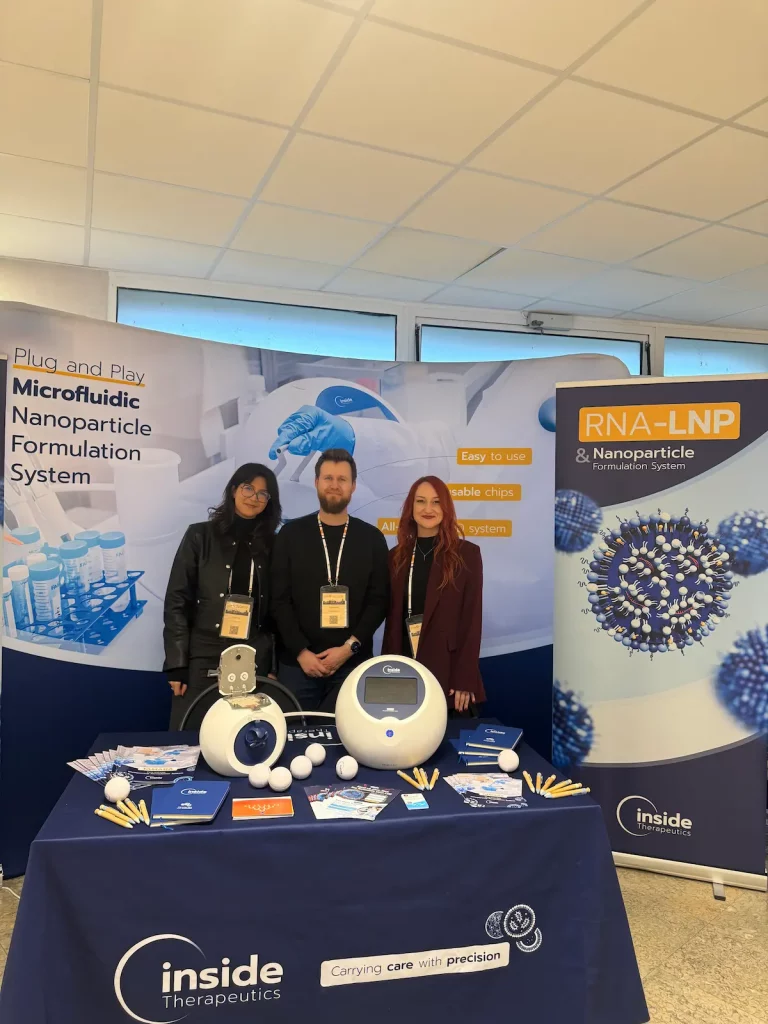
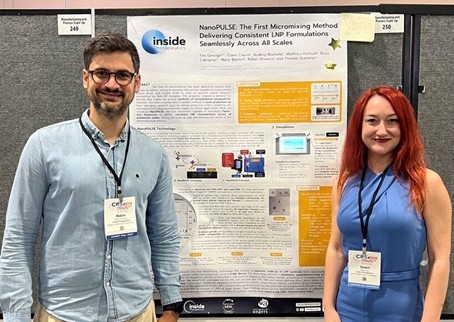
SFNano 2025 Conference Recap
Key themes & Insights from SFNano 2025
- Continuous and scalable LNP production was a major focus, highlighting how mixing parameters directly impact critical quality attributes (CQAs), the importance of process development for continuous manufacturing, and the growing role of inline process analytical technologies (PAT) across development stages.
- Two standout scientific talks provided valuable perspective:
- In his keynote, Prof. Elias Fattal addressed the ongoing challenges of drug targeting in inflammatory diseases using nanotechnologies.
- Prof. Nicolas Bertrand shared key insights on PEGylated nanomedicines, anti-PEG antibodies, and the complement system.
- Presentations on emerging technologies — including LNP–EV hybrid nanoparticles and photoporation for efficient cell transfection — particularly caught our attention.
- Beyond traditional LNPs and liposomes, a wide range of nanoparticle systems were discussed, including LNP-loaded hydrogels, bola-amphiphilic glycodendrimers, polysaccharide patches with PLA nanoparticles, gold-decorated iron oxide nanoflowers (GIONFs), hybrid polysaccharide–magnetite microgels, and gold nanostars and nanorods.
- Advanced imaging and characterization techniques were also featured, including Raman microscopy to track drug delivery systems and their fate in tissues.
- Overall, talks covered a broad spectrum of applications, with a strong emphasis on oncology, alongside cardiovascular diseases, respiratory diseases, infectious diseases and vaccination, and multiple areas in diagnostics and imaging.

Selected presentation highlights
Here are the insights we’re excited to share from the talks that made an impact for us.
Keynote: Getting around the complexity of drug targeting in inflammatory diseases using nanotechnologies: lessons for the future? (Prof Elias FATTAL, Université Paris-Saclay, Institut Galien Paris-Saclay, France)
- Targeting immune cells: Monocytes and macrophages are targeted using liposomes, LNPs, and polymer-based nanoparticles (e.g., PLGA-PEG NPs).
- PEGylation and trafficking mechanisms, including EPR (Enhanced Permeability and Retention) and ELVIS (Extravasation through Leaky Vasculature and subsequent Inflammatory cell–mediated Sequestration), play a role guiding nanoparticle delivery to inflamed tissues.
- Three main focuses of the talk in the context of autoimmune/inflammatory diseases were:
- Rheumatoid arthritis: Dexamethasone palmitate encapsulated in PLGA-PEG nanoparticles [1] and antagomiR-155-5p entrapped within PEGylated liposomes [2], allowing the delivery to monocytes/macrophages, improved outcomes in the tested models. Notably, PEGylated liposomes demonstrated myeloid cell-mediated “hitchhiking” to inflamed joints.
- Sepsis: Dexamethasone (DXM)-loaded micelles were engineered for rapid drug release and efficient hitchhiking. [3] In parallel, neutrophil-mediated hitchhiking was shown by another group to enhance liposomal DXM therapy in sepsis. [4]
- Sepsis-induced Acute Lung Injury (ALI): siRNA-loaded LNPs targeting TNF-α demonstrated efficacy in treating lung inflammation, and the study highlighted the importance of delivery timing to maximize therapeutic outcomes. [5] In a separate study from the same lab — a project I directly contributed to — we also demonstrated that LNPs with shorter chain PEG-lipid anchors drive significantly faster siRNA knockdown kinetics. [6]
PEGylated nanomedicines, antibodies and the complement, insights from animals and humans (Prof Nicolas BERTRAND, Université Laval, CANADA)
- PEGylated nanomedicines can activate the complement cascade. While complement deposition has limited impact on pharmacokinetics, it can influence cellular distribution. [7], [8], [9]
- Complement can influence the generation and activity of anti-PEG antibodies.
- Anti-PEG antibodies (e.g., IgM) can modify the deposition of protein corona on nanoparticles and accelerate clearance following repeated injections. [10]
- Human data & mRNA vaccines: Presence of anti-PEG antibodies prior to treatment is common in humans, and vaccination with PEG-containing mRNA vaccines might have increased the prevalence and concentration of anti-PEG antibodies.
- Higher anti-PEG antibody levels correlate with increased complement activation, though no direct link to adverse events was observed.
- Future work is needed to understand how increased complement activation affects nanomedicine fate and efficacy.
Hybridization of EVs and LNPs enables advanced mRNA delivery: Insights from super-resolution microscopy (Dr Lucile ALEXANDRE, University of Paris Cité, FRANCE)
- Rationale for Extracellular Vesicles (EVs): Non-immunogenic, naturally protective, enhanced transport in tissues/fluids, and improved cytosolic delivery compared to synthetic systems.
- EV–LNP hybrid nanovectors: Combine synthetic LNPs (high loading efficiency) with biological vector EVs (facilitated transport and intracellular delivery, biocompatibility) to overcome individual limitations and increase transfection efficiency.
- Characterization: A novel super-resolution microscopy approach combined with spectral demixing was developed for single-particle analysis of hybrid EV–LNP nanovectors.
- Takeaway: Hybrid EV–LNP systems can combine the best of both vectors — enabling higher drug loading, more efficient delivery, improved targeting, and lower immunogenicity.
Lighting the way: Nanoparticle-enhanced photoporation for safe and effective cell transfection in regenerative medicine and cell therapy (Prof Kevin BRAECKMANS, Ghent University, BELGIUM)
- Photoporation: Non-viral transfection method using photothermal nanoparticles (e.g., gold NPs) and pulsed laser irradiation to transiently permeabilize cell membranes, allowing delivery of therapeutics.
- Mechanism: Nanoparticles absorb laser light → generate heat → form vapor nanobubbles (VNBs) → VNB collapse creates pores in the cell membrane → payload delivered to cytosol.
- Comparison to nucleofection: VNB-mediated photoporation of cytotoxic T cells using gold NPs enabled safe and efficient cytosolic delivery of siRNA, achieving ~3x more viable and effectively transfected T cells than nucleofection (due to lower toxicity). [13]
- Safety considerations: Inorganic NPs have poor biodegradability, leading to concerns on long-term toxicity and regulatory approval.
- Application examples include combining photothermal therapy and chemotherapy to treat cancer using gold nanoparticles.
- Gold nanostars (GNS) and gold nanorods (GNRs) have different photothermal behaviors. Moreover, gold nanoparticles can be PEG-functionalized to fine-tune their performance.
References
[1] R. Simón-Vázquez et al., “Improving dexamethasone drug loading and efficacy in treating arthritis through a lipophilic prodrug entrapped into PLGA-PEG nanoparticles,” Drug Deliv Transl Res, vol. 12, no. 5, pp. 1270–1284, May 2022, doi: 10.1007/s13346-021-01112-3.
[2] A. Paoletti et al., “Liposomal AntagomiR-155-5p Restores Anti-Inflammatory Macrophages and Improves Arthritis in Preclinical Models of Rheumatoid Arthritis,” Arthritis and Rheumatology, vol. 76, no. 1, pp. 18–31, Jan. 2024, doi: 10.1002/art.42665.
[3] Y. Louaguenouni et al., “Robust micelles formulation to improve systemic corticosteroid therapy in sepsis in multiple healthcare systems,” Journal of Controlled Release, vol. 381, May 2025, doi: 10.1016/j.jconrel.2025.113635.
[4] R. Mathur et al., “Neutrophil Hitchhiking Enhances Liposomal Dexamethasone Therapy of Sepsis,” ACS Nano, vol. 18, no. 42, pp. 28866–28880, Oct. 2024, doi: 10.1021/acsnano.4c09054.
[5] Q. Wang et al., “Pulmonary Delivery of siRNA Anti-TNFα-loaded Lipid Nanoparticles for Rapid Recovery in Murine Acute Lung Injury,” Adv Healthc Mater, vol. 14, no. 29, Nov. 2025, doi: 10.1002/adhm.202500695.
[6] S. Gül et al., “Deciphering the role of polyethylene glycol-lipid anchors in siRNA-LNP efficacy for P2y2 inhibition in bone marrow-derived macrophages,” Int J Pharm, vol. 684, Nov. 2025, doi: 10.1016/j.ijpharm.2025.126186.
[7] I. M. D. O. Viana, P. Grenier, J. Defrêne, F. Barabé, E. M. Lima, and N. Bertrand, “Role of the complement cascade in the biological fate of liposomes in rodents,” Nanoscale, vol. 12, no. 36, pp. 18875–18884, Sep. 2020, doi: 10.1039/d0nr04100a.
[8] N. Bertrand et al., “Mechanistic understanding of in vivo protein corona formation on polymeric nanoparticles and impact on pharmacokinetics,” Nat Commun, vol. 8, no. 1, Dec. 2017, doi: 10.1038/s41467-017-00600-w.
[9] P. Grenier, V. Chénard, and N. Bertrand, “The mechanisms of anti-PEG immune response are different in the spleen and the lymph nodes,” Journal of Controlled Release, vol. 353, pp. 611–620, Jan. 2023, doi: 10.1016/j.jconrel.2022.12.005.
[10] P. Grenier, I. M. de O. Viana, E. M. Lima, and N. Bertrand, “Anti-polyethylene glycol antibodies alter the protein corona deposited on nanoparticles and the physiological pathways regulating their fate in vivo,” Journal of Controlled Release, vol. 287, pp. 121–131, Oct. 2018, doi: 10.1016/j.jconrel.2018.08.022.
[11] L. Alexandre et al., “Illuminating Extracellular Vesicles Biology with Super-Resolution Microscopy: Insights into Morphology and Composition,” Jul. 15, 2025, American Chemical Society. doi: 10.1021/acsnano.5c00380.
[12] J. A. Webb and R. Bardhan, “Emerging advances in nanomedicine with engineered gold nanostructures,” Mar. 07, 2014. doi: 10.1039/c3nr05112a.
[13] L. Wayteck, R. Xiong, K. Braeckmans, S. C. De Smedt, and K. Raemdonck, “Comparing photoporation and nucleofection for delivery of small interfering RNA to cytotoxic T cells,” Journal of Controlled Release, vol. 267, pp. 154–162, Dec. 2017, doi: 10.1016/j.jconrel.2017.08.002.
Looking to formulate targeted RNA-LNP?
Reach out to us to learn how we can help!
Nov. 24 to 26, 2025 Where:
Lyon, France
Looking to get started or improve your LNP formulation screening?
Reach out to us to discover how we can help!