






Infectious Diseases
Can next-generation therapeutics transform the fight against infectious diseases?
Infectious diseases remain a persistent and evolving global health threat. While vaccines, antivirals, and antibiotics have dramatically reduced mortality, limitations such as drug resistance, limited broad-spectrum efficacy, and delayed response to novel pathogens highlight the need for more adaptable and precise therapeutic platforms. Advances in nucleic acid therapeutics and nanoparticle-enabled delivery systems are redefining how we prevent and treat infectious diseases. By enabling rapid design, scalable manufacturing, and targeted immune modulation, these technologies offer flexible solutions capable of responding to both established and emerging infectious threats.
The evolving landscape of infectious diseases
Global challenges & therapeutic limitations
Infectious diseases caused by viruses, bacteria, and other pathogens continue to account for significant morbidity and mortality worldwide. Viral outbreaks, antimicrobial-resistant bacteria, and chronic infections such as human immunodeficiency virus 1 (HIV-1) or hepatitis B virus (HBV) remain major clinical challenges.
Traditional therapies often rely on small-molecule antivirals or antibiotics that target specific pathogen proteins. However, high mutation rates in viruses and the rapid emergence of antimicrobial resistance frequently reduce long-term efficacy. Additionally, broad-spectrum treatments can disrupt normal microbiota and lead to unintended side effects. These challenges highlight the need for innovative strategies that are rapidly adaptable, pathogen-specific, and capable of modulating host immune responses.
From pathogen suppression to molecular targeting
Conventional treatments primarily aim to inhibit pathogen replication or kill infectious agents directly. In contrast, nucleic acid–based approaches enable precise molecular intervention — targeting viral genomes, silencing resistance genes, expressing protective antigens, or enhancing host immunity.
This shift toward programmable molecular targeting allows rapid redesign in response to new variants or emerging pathogens. By directly modulating gene expression in pathogens or host cells, next-generation therapeutics offer a powerful framework for precision infectious disease management.
What therapeutic modalities are reshaping infectious disease treatment?
The rise of nucleic acid therapeutics
A new class of programmable therapies is transforming prevention and treatment strategies against infectious diseases:
- mRNA vaccines and therapeutics, enabling rapid expression of pathogen antigens or immune-modulating proteins.
- saRNA & circRNA vaccines are more advanced RNA modalities that can support longer-lasting expression than conventional mRNA vaccines.
- Plasmid DNA (pDNA) for antigen expression and long-lasting immune stimulation.
These platforms allow rapid development cycles, high specificity, and adaptability to newly emerging pathogens — critical advantages in outbreak scenarios.


How do nanoparticle technologies enable infectious disease therapeutics?
Overcoming in vivo delivery barriers
Nucleic acids are inherently unstable in biological environments and face enzymatic degradation, rapid clearance, and poor cellular uptake. Efficient delivery to the appropriate immune cells or infected tissues is essential for therapeutic efficacy.
Nanoparticle platforms — including lipid-based and polymer-based systems — protect nucleic acids from degradation, enhance cellular internalization, and enable cytosolic release. Their physicochemical properties can be engineered to optimize biodistribution and immune activation.
While viral vectors have also been explored for infectious disease applications, non-viral nanoparticle systems offer improved safety profiles, manufacturing scalability, and flexibility for rapid reformulation.
Where are nanoparticle platforms applied in infectious diseases?
Key therapeutic applications
- Prophylactic vaccination – Nanoparticle–based mRNA vaccines enable rapid antigen expression and robust immune responses against pathogens.
- Therapeutic vaccines – Nanoparticles can deliver nucleic acids that enhance immune recognition of chronic infections such as HIV or hepatitis B.
- Direct antiviral gene silencing – siRNA and ASO delivery platforms can selectively suppress viral RNA replication within infected cells.
- CRISPR-based antiviral strategies – Nanocarriers enable delivery of gene editing components designed to target and degrade viral genomes.
- Antimicrobial resistance targeting – Nucleic acid therapeutics can silence resistance genes in bacteria, restoring antibiotic sensitivity.
- Immune modulation – Nanoparticles can deliver cytokine-encoding mRNA or immunostimulatory RNA to enhance host defense mechanisms.

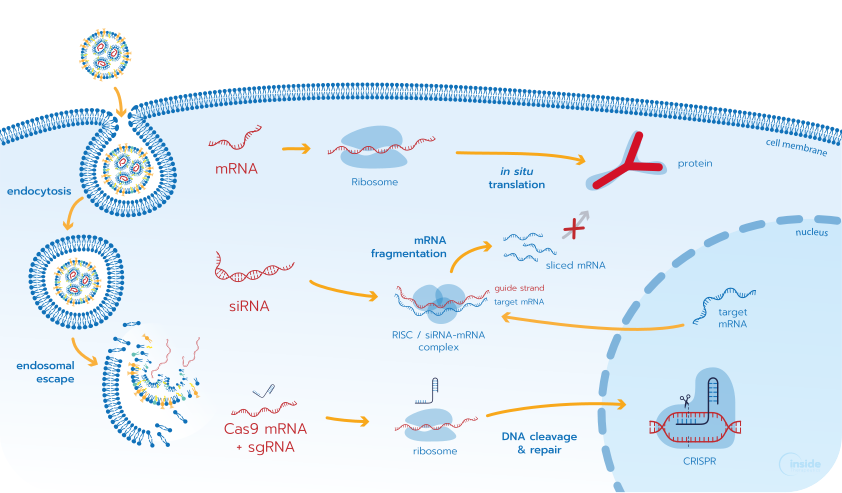
How lipid nanoparticles drive modern infectious disease therapeutics
A rapid, scalable, and clinically validated platform
Lipid nanoparticles (LNPs) have become central to infectious disease therapeutics due to their ability to encapsulate and protect mRNA, siRNA, and other nucleic acid payloads. Their clinical potential was demonstrated at unprecedented scale through the success of mRNA COVID-19 vaccines, where LNPs enabled safe and efficient delivery of mRNA encoding the SARS-CoV-2 spike protein. By facilitating cellular uptake and promoting endosomal escape, LNPs ensure robust intracellular expression of therapeutic cargo.
Their modular composition allows rapid reformulation in response to emerging pathogens or viral variants. Scalable manufacturing processes and real-world clinical validation have established LNPs as a proven platform for global vaccination campaigns and rapid outbreak response.
Take a deeper dive into the world of nanomedicine
Check our related content and discover how we can help


How we can help
Want to bring RNA-LNPs into your own lab?
We provide the tools, resources, and expertise you need to work independently with RNA-LNPs:
- TAMARA – our integrated microfluidics platform that empowers you to formulate RNA-LNPs quickly, efficiently and reliably, producing reproducible nanoparticles with ease.
- Lipid kits for reliable, reproducible & benchmarked RNA-LNP preparation.
- Comprehensive resources, including RNA-LNP protocols, application notes, and best practices to support your workflow from design to formulation.
- Training programs that teach practical formulation and handling skills.


Looking to run proof-of-concept RNA-LNP studies?
Our tailored formulation services help you quickly evaluate RNA-LNPs in your own lab or to accelerate your experimental progress:
- LNP design, based on either trusted benchmark compositions (Moderna, Pfizer…) or custom formulations.
- Formulation using microfluidics & purification to ensure a controlled, reproducible and efficient development process.
- Comprehensive CQA characterization, including size, PDI, and encapsulation efficiency, with advanced options such as morphology and payload loading.
- Lipids and/or reporter RNA supply for an end-to-end project solution.
Related resources
Review


A complete guide to understanding Lipid Nanoparticles (LNP)
Read more
Review

Lipid Nanoparticle for mRNA delivery
Read more
Review

An introduction to Lipid Nanoparticles (LNPs) for siRNA delivery
Read more
Review


Biodistribution of RNA-LNP, a review
Read more
Review
A guide to RNA-LNP formulation screening
Read more
Review

How to optimize lipid nanoparticle formulation?
Read more
Review

Lipid nanoparticle (LNP) manufacturing methods: A comprehensive guide
Read more
Product


TAMARA
Read more

