






Oncology
Can precision therapeutics transform the future of oncology?
Cancer continues to be one of the most significant threats to global health in 2025, affecting millions each year. While traditional treatments — including surgery, radiotherapy, chemotherapy, targeted therapy, and immunotherapy — have extended survival for many patients, their effectiveness is often limited by poor selectivity, intolerable side effects, and the development of therapeutic resistance. These challenges have fueled the development of advanced nucleic acid-based and nanoparticle‑enabled therapeutics, which aim to deliver more precise, safer, and adaptable options to transform cancer care. By enabling targeted modulation of gene expression, immune engagement, and tumor biology, next‑generation therapeutics offer the promise of more personalized and durable cancer treatments.
Rethinking cancer treatment with next-generation therapeutics
The global burden of cancer
Cancer remains one of the leading causes of morbidity and mortality worldwide. It arises from the accumulation of genetic and epigenetic alterations that disrupt normal cellular regulation, enabling uncontrolled proliferation, immune evasion, angiogenesis, and metastasis. Despite major advances in surgery, chemotherapy, radiotherapy, and targeted therapies, many malignancies remain difficult to treat, particularly in advanced or resistant stages.
Beyond its biological complexity, cancer presents profound clinical challenges. Tumor heterogeneity, adaptive resistance mechanisms, and immunosuppressive microenvironments often limit the durability of current treatments. These realities drive the urgent need for more precise, adaptable, and personalized therapeutic strategies.
A shift in therapeutic strategy
Traditional cancer treatments largely focus on destroying rapidly dividing cells or inhibiting dysregulated signaling pathways. While often effective, these approaches can lack specificity and cause significant systemic toxicity.
Modern oncology is increasingly shifting toward molecular precision — targeting the specific genetic drivers, signaling networks, and immune interactions that sustain tumor growth. Nucleic acid–based therapeutics now offer the ability to silence oncogenes, restore tumor suppressor function, express therapeutic proteins, reprogram immune cells, and modulate the tumor microenvironment. This transition marks a paradigm shift from broadly attacking tumors to rationally engineering therapeutic responses.
What therapeutic modalities are transforming oncology?
The rise of nucleic acid therapeutics
A new generation of therapies is expanding the oncology landscape beyond small molecules and monoclonal antibodies. These include:
- mRNA therapeutics, enabling transient expression of tumor antigens, cytokines, or immune-modulating proteins.
- siRNA and antisense oligonucleotides, capable of silencing oncogenes or resistance-associated genes.
- Plasmid DNA (pDNA) for sustained therapeutic protein expression.
- Gene editing systems, such as CRISPR-based tools, to disrupt oncogenic drivers or engineer immune cells.
These modalities allow direct manipulation of gene expression and cellular behavior, opening opportunities for personalized cancer vaccines, precision immunotherapies, and next-generation cell therapies.

How do nanoparticle technologies enable precision oncology?
Overcoming biological delivery barriers
Nucleic acids face significant physiological barriers, including enzymatic degradation, rapid clearance, and poor cellular uptake. Nanoparticle platforms are engineered to overcome these obstacles, protecting cargo while facilitating targeted intracellular delivery.
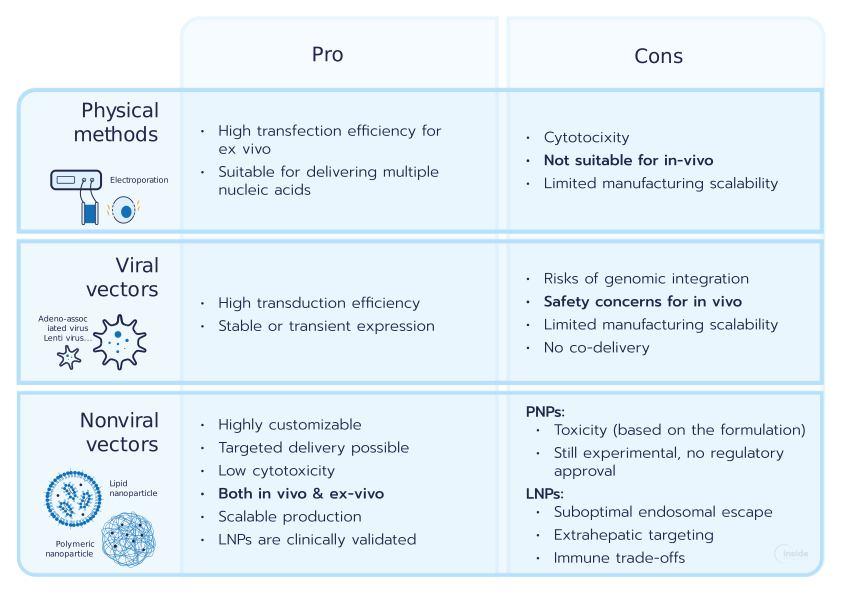
Both viral and non-viral systems have been explored in oncology. While viral vectors offer high transduction efficiency, they present challenges including immunogenicity, insertional mutagenesis risks, and complex manufacturing. In contrast, non-viral nanoparticles (e.g., lipid- or polymer-based nanoparticles) provide tunable, modular platforms with improved safety profiles and scalable production potential.
Where are nanoparticle platforms applied in cancer therapy?
Key therapeutic applications
- Cancer immunotherapy – Nanoparticle delivery of mRNA encoding tumor antigens or immunostimulatory factors supports personalized cancer vaccines and in situ immune activation.
- Gene silencing in tumors – Lipid and polymer-based nanoparticles can deliver siRNA, miRNA, or ASOs to suppress oncogenes, angiogenic factors, or drug-resistance pathways.
- Immune cell engineering – Non-viral nanoparticle systems enable ex vivo and in vivo reprogramming of T cells or NK cells, accelerating the development of advanced CAR-T and CAR-NK therapies.
- Tumor microenvironment modulation – Nanocarriers can deliver nucleic acids that reprogram immune cells (e.g., tumor-associated macrophages (TAMs)) within the tumor microenvironment, improving responsiveness to immunotherapy.
- Combination therapies – Nanoparticles allow co-delivery of nucleic acids with chemotherapeutics or immune modulators, enabling synergistic treatment strategies.

How lipid nanoparticles enhance modern cancer therapeutics?
An adaptable, clinically scalable delivery platform
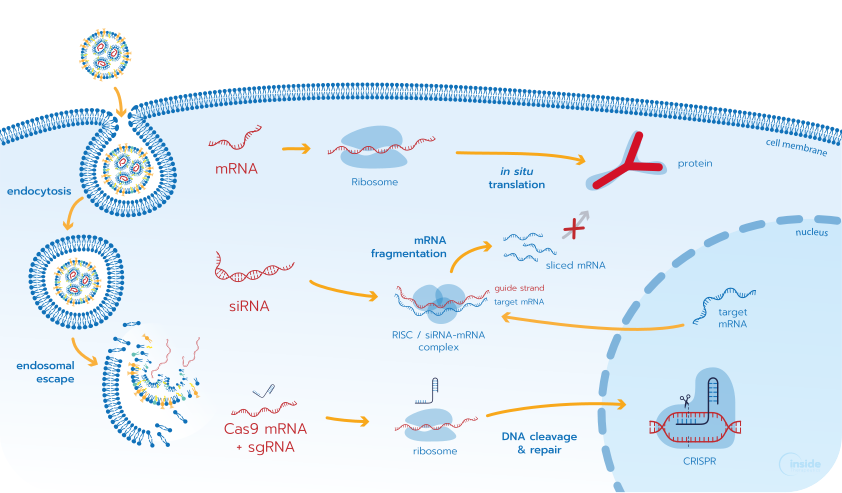
Lipid nanoparticles (LNPs) have emerged as a leading non-viral delivery system for nucleic acid therapeutics in oncology. They can encapsulate diverse payloads — including mRNA, siRNA, and gene-editing components — protecting them from degradation, facilitating their cellular uptake, and enabling cytosolic delivery via endosomal escape.
LNPs are generally biocompatible and biodegradable, leading to reduced systemic toxicity. Their composition can be engineered to optimize pharmacokinetics, enhance tumor targeting, and enable repeat dosing. With scalable manufacturing processes and growing clinical validation, LNP platforms represent a powerful and versatile foundation for next-generation precision oncology therapies.


How we can help
Want to bring RNA-LNPs into your own lab?
We provide the tools, resources, and expertise you need to work independently with RNA-LNPs:
- TAMARA – our integrated microfluidics platform that empowers you to formulate RNA-LNPs quickly, efficiently and reliably, producing reproducible nanoparticles with ease.
- Lipid kits for reliable, reproducible & benchmarked RNA-LNP preparation.
- Comprehensive resources, including RNA-LNP protocols, application notes, and best practices to support your workflow from design to formulation.
- Training programs that teach practical formulation and handling skills.


Looking to run proof-of-concept RNA-LNP studies?
Our tailored formulation services help you quickly evaluate RNA-LNPs in your own lab or to accelerate your experimental progress:
- LNP design, based on either trusted benchmark compositions (Moderna, Pfizer…) or custom formulations.
- Formulation using microfluidics & purification to ensure a controlled, reproducible and efficient development process.
- Comprehensive CQA characterization, including size, PDI, and encapsulation efficiency, with advanced options such as morphology and payload loading.
- Lipids and/or reporter RNA supply for an end-to-end project solution.
Related resources
Review


Lipid-based nanoparticles drug delivery for cancer therapies
Read more
Review

A complete guide to understanding Lipid Nanoparticles (LNP)
Read more
Review

Lipid Nanoparticle for mRNA delivery
Read more
Review


Biodistribution of RNA-LNP, a review
Read more
Review

A guide to RNA-LNP formulation screening
Read more
Review

How to optimize lipid nanoparticle formulation?
Read more
Review

Lipid nanoparticle (LNP) manufacturing methods: A comprehensive guide
Read more
Product


TAMARA
Read more

