Tell us about your nanoparticle or RNA project and request Ntensify® micro and mini demo Our team will get back to you shortly to schedule your session.
Loading specific message...
Contact
Any inquiries about RNA synthesis systems? Drop us a line!
Loading specific message...
Contact
Any inquiries about your nanoparticle/RNA-LNP formulation? Drop us a line!
Loading specific message...
Contact
Any inquiries about your nanoparticle/RNA-LNP formulation? Drop us a line!
Loading specific message...
Book a demo
Tell us about your nanoparticle or RNA-LNP project and request a TAMARA demonstration. Our team will get back to you shortly to schedule your session.
The second edition of RNA-LNP day, hosted by the Société Française des Nanomédecines (SFNano) and Banque Publique d’Investissement (BPI), brought together France’s RNA-LNP community — academic groups (Institut Imagine, ARNA-Inserm, ART-Inserm, Université de Genève), industry (Moderna, Sanofi, Ceva Santé Animale, Neovacs, Genother, Inside Therapeutics), CDMOs (Corden Pharma, Cell for Cure), and regulators (ANSM) — at Banque Populaire de l’Innovation in Paris. The day was organized around two questions: where therapeutic applications of LNP/RNA are heading, and what it will take for translation to keep up. We attended both sessions; what follows are the themes and selected presentations that stood out.
Date of the event: Apr. 10, 2026Where: Paris, France
Key takeaways from RNA-LNP day 2026
The day made one thing clear: the French RNA-LNP community is no longer working on a single problem. The delivery science has matured past “does it reach the target tissue” into harder questions about what fraction of a delivered LNP actually produces the intended biological effect — uptake, escape, expression, durability. The translation infrastructure has matured in parallel, with the European Pharmacopoeia, ANSM, and a new generation of GMP-capable production platforms moving from “we should standardize this” to “here are the chapters and the systems.” Both fronts were visibly active in the room, and several talks deliberately bridged them.
A second observation worth flagging: the therapeutic ambition has widened well beyond mRNA vaccines. In vivo CAR-T, base editing for sickle cell disease, allergy and autoimmunity, oncohematology, and veterinary applications were all presented with clinical or pre-clinical data. The shared question across these programs is no longer “can RNA-LNP do this” but “what does productive delivery look like for this indication, and how do we manufacture it at the right scale without losing the biology.”
Hot topics from RNA-LNP day 2026
Five topics recurred across the day — sometimes named explicitly, sometimes surfacing through different speakers approaching the same problem from different angles.
The French translation stack is structuring around platform thinking. Regulatory and production infrastructure is no longer trailing the science by years. The mRNAVAC working party is developing European Pharmacopoeia chapters for nucleotides, DNA templates, lipids, and finished mRNA-LNP products. The ANSM Guichet Innovation et Orientation offers an active interface for scientific advice and early-phase consulting. The Baby KJ case — a personalized urea cycle disorder treatment developed in seven months — surfaced repeatedly as proof that compressed timelines are possible when end-to-end production capacity exists.
“Productive targeting” replaces targeting as the operative concept. Multiple speakers — opening with Chantal Pichon and echoed throughout the day — pushed back on the simplification that tissue-level targeting equals delivery. What matters is the full chain: protein corona composition, cellular uptake, endosomal escape, and protein expression — the productive fraction of what was delivered. Recent work disentangling cellular uptake from expression efficiency was cited as a reminder that a particle that gets in is not a particle that works.
In vivo CAR-T is moving from concept to clinic. The current ex vivo CAR-T paradigm is constrained by cost (~250–350 k€ per patient), timeline (6–8 weeks), and dependency on offshore manufacturing. In vivo CAR-T, where the CAR-encoding nucleic acid is delivered directly to circulating T cells via LNP, addresses all three. The first patient was treated in November 2024; over fifteen phase 1 trials are ongoing.
Base editing in HSPCs is the strongest current case for LNPs over electroporation. Direct comparisons in hematopoietic stem and progenitor cells show that electroporation perturbs apoptosis and growth profiles relative to healthy cells, while LNP-mediated delivery preserves them. Optimization of ApoE concentration emerged as a key formulation lever — a reminder that protein corona composition is a tunable parameter, not a fixed property.
The PEG dilemma remains the open problem of chronic-indication LNPs. Repeated administration came up across both round tables. Anti-PEG antibodies are a known liability; polyoxazolines do not solve the problem (they too elicit antibody responses). Polysarcosine was named as the most promising current alternative. The field has no settled answer for indications that require durable response without redosing — allergy, autoimmunity, and parts of oncology all sit on this question.
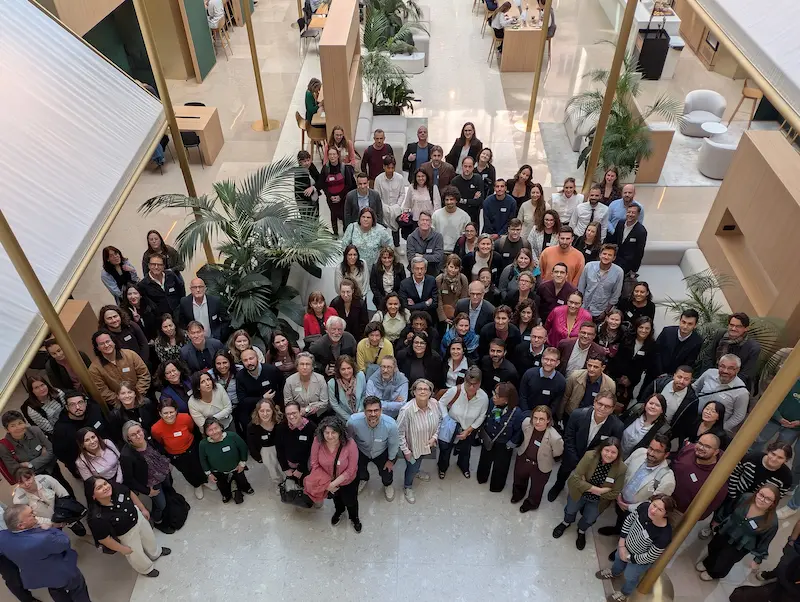
LNP days audience
Selected presentation highlights
We selected three talks for in-depth coverage based on the depth of data presented and on broader relevance for groups working on delivery, formulation, and translation.
In vivo CAR-T cells: a non-viral path to T-cell engineering(Sophie Caillat-Zucman, Hôpital Saint-Louis)
Context: approximately 35,000 patients have been treated worldwide with ex vivo CAR-T (around 6,000 in France). Anti-CD19 and anti-BCMA therapies are FDA-approved. About half of patients fail to achieve a durable response.
Cost (~250–350 k€) and the 6–8 week manufacturing timeline make scaling ex vivo CAR-T difficult. Two alternatives are under active development: allogeneic ex vivo CAR-T, and in vivo CAR-T.
In vivo CAR-T uses an LNP carrying CAR-encoding nucleic acid (DNA or RNA) to engineer circulating T cells directly. The estimated total T-cell pool is 5×10¹¹ cells.
LNP versus lentiviral comparison: LNP offers an improved safety profile but may require high or repeated doses and shows preferential delivery to liver. LV-mediated CAR-T can persist over ten years.
The first patient was treated in November 2024. More than fifteen phase 1 trials are ongoing.
Like staying up to date? So do we.
Join the newsletter for the newest Reviews.
LNP-mediated base editing for β-hemoglobinopathies(Annarita Miccio, Institut Imagine)
Context: sickle cell disease and other β-hemoglobinopathies have been clinical priorities for genome editing. CRISPR-Cas9 strategies activate fetal hemoglobin expression, but double-strand break (DSB)-related toxicities are a known liability.
Adenine base editing avoids DSBs and is the focus of clinical-stage programs at BEAM and Verve.
Direct comparison in HSPCs: electroporation perturbs apoptosis and cell growth profiles relative to healthy cells, while LNP-mediated delivery preserves both. This is an under-discussed argument for non-viral, non-electroporation delivery in cell-therapy settings.
ApoE concentration in the formulation was identified as a key lever for transfection efficiency. Working dose discussed: 10 pg/cell of base editor system.
A miR-122 binding site in the construct was discussed as a strategy for reducing off-target liver expression — an example of how cargo design and delivery design are increasingly co-engineered.
Quality requirements and pharmacopoeial standardization for nanomedicines(Gerrit Borchard, Université de Genève)
Context: at the onset of the COVID-19 pandemic, very few facilities were able to manufacture GMP-grade mRNA-LNP drug product. Pfizer/BioNTech delivered approximately 665 million doses; Moderna approximately 156 million. The question of how to source and assure quality at billion-dose scale remains open.
The talk walked through the three production steps (DNA template → mRNA → drug product) and the standardization gaps at each: raw materials (especially nucleotides), starting materials (DNA template), excipients (lipids, KCl, KH₂PO₄, NaCl, Na₂HPO₄, sucrose for ALC-formulated vaccines).
Borchard chairs the mRNAVAC working party — an international group developing European Pharmacopoeia chapters for mRNA vaccines for human use. New chapters (5.36, 5.39 and others) are being adopted.
Specific technical points raised: size measurement is method-dependent (DLS, NTA, and cryo-TEM each give different readouts and need to be reported as such). For products containing more than one RNA, RT-dPCR or RP-HPLC are needed for accurate RNA content determination.
Case study: a quaternary mRNA dengue vaccine in development. Storage strategy was raised as an open question, with freeze-drying of mRNA-LNP under active investigation.
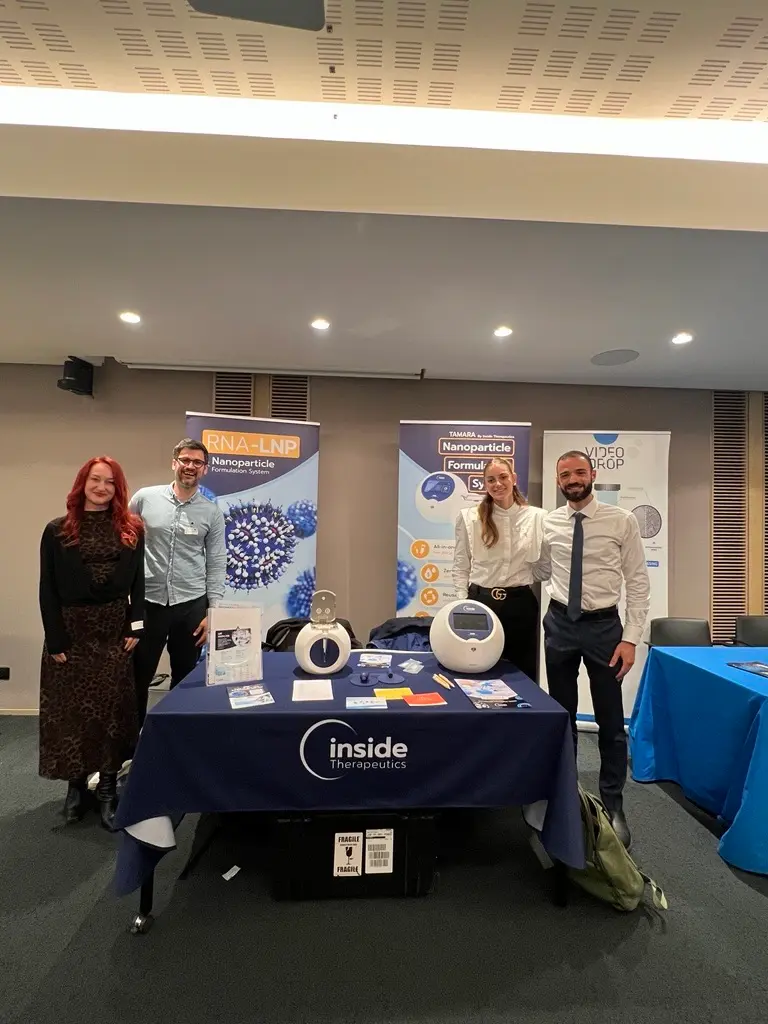
Inside Therapeutics at LNP Days
Further highlights from the conference
Chantal Pichon (ART-Inserm) opened the day with a translational overview: targeting precision, endosomal escape, the regulatory case for platform-based market authorizations, and the role of AI in accelerating formulation iteration. She also raised personalized RNA therapeutics as a frontier still constrained by integrated production capacity from screening to GMP.
Caroline Dupont (Ceva Santé Animale) presented Ceva’s veterinary mRNA program: BioFluARN against avian influenza (40,000 ducks vaccinated to date) and a saRNA-based porcine influenza vaccine. Their formulations use DOTAP-based LION particles and LIPIDOT LNPs (mRNA-loaded, 30–120 nm). Scale-up via QbD: 2 L (manual) → 20 L (semi-automatic) → 100 L (automatic).
Katia Lemdani (Neovacs) presented an mRNA approach to allergic asthma encoding IL-4/IL-13 epitopes to elicit a B-cell-mediated response against self-cytokines. Murine and NHP data showed reduced cytokine secretion with no weight effect. The work also introduced a novel ionizable lipid family (ON lipid family, in collaboration with Nathalie Mignet) — including ON112, designed for local distribution following intramuscular injection.
Chantal Lagresle (Institut Imagine) discussed RAC2-related immunodeficiency and LNP-delivered RAC2 G12 mRNA as a non-genotoxic alternative for malignant cell depletion before HSCT, with in vitro AML data.
Serra Gurcan (Corden Pharma) outlined GMP scale-up priorities: IP verification, lipid quality (solubility/stability), nucleic acid stability, and characterization across raw materials, payload, lipids, and formulated nanoparticles. Corden’s iRISK platform was presented as the framework for managing these in development.
Julie Barthuet (Sanofi) and Guillaume Vaquer (ANSM) addressed the regulatory framework for mRNA-LNP vaccines: the contrast with traditional vaccines (well-defined and characterized components versus complex biological cell-based processes), the 2025 EMA guideline on quality aspects of mRNA vaccines, the 2025 European Pharmacopoeia monograph on mRNA vaccines for human use, and the Guichet Innovation et Orientation as an entry point for early-stage programs.
AM round table (moderated by Giuseppe Ronzitti, Genethon, and Jeanne Leblond Chain, ARNA-Inserm) covered repeated-dose strategies for in vivo CAR-T and allergy, IP and Freedom-to-Operate constraints on novel ionizable lipids, safety-switch design for in vivo CAR-T toxicity control, and the polysarcosine alternative to PEG.
PM round table (moderated by Béatrice Keukeleire, BPI) discussed funding pathways for personalized RNA therapeutics, BPI Santé investment criteria post-animal POC, the IIT (investigator-initiated trial) regulatory shortcut, and the operational gap that currently pushes some early clinical-grade work outside France/EU.
Date of the event: Apr. 10, 2026Where: Paris, France
Looking to get started or improve your LNP formulation screening?
Reach out to us to discover how we can help!
Other Conference Recaps
Looking for more insights from conferences? Check out other conference recaps to stay updated on the latest developments!