


Book a demo
Tell us about your nanoparticle or RNA project and request Ntensify® micro and mini demo
Our team will get back to you shortly to schedule your session.
Contact
Any inquiries about RNA synthesis systems?
Drop us a line!

Contact
Any inquiries about your nanoparticle/RNA-LNP formulation?
Drop us a line!

Contact
Any inquiries about your nanoparticle/RNA-LNP formulation?
Drop us a line!
Book a demo
Tell us about your nanoparticle or RNA-LNP project and request a TAMARA demonstration.
Our team will get back to you shortly to schedule your session.
NANOPULSE
One mixing technology to scale identical LNPs from screening to production
Designed for scalable RNA-LNP formulation, keeping mixing conditions identical as volume increases — preserving particle attributes without scale-specific re-optimization.
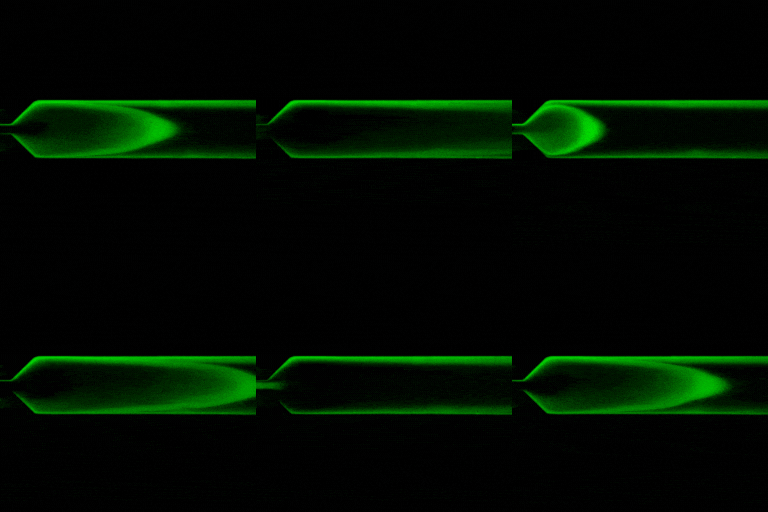

One platform, from µL screening to multi-liter continuous production
Keep the same mixing conditions at every scale, so nanoparticle stays consistent
The particle you validate is the one you produce
A main barrier to mRNA vaccines development is “achieving reproducible LNP formulation and scale-up while maintaining key particle quality attributes across batches.”
Robert Langer et al., Expanding global access to mRNA vaccines. Nature Reviews Bioengineering (2026)
No current mixing technology keeps the same mixing across scales
An RNA-LNP is shaped by how the aqueous and organic phases mix.
But the technologies that give fine control at R&D volumes are not the ones used in production — so a program switches mixing technology on the way to the clinic.
And even when the technology stays the same, the hardware doesn’t. Moving from a bench system to a GMP system means a larger mixer, a new geometry or higher flow rates, and with them different local mixing conditions.

Figure 1 – The scale-up gap. Microfluidics for R&D, IJM/T-mix for production — no technology spans both.
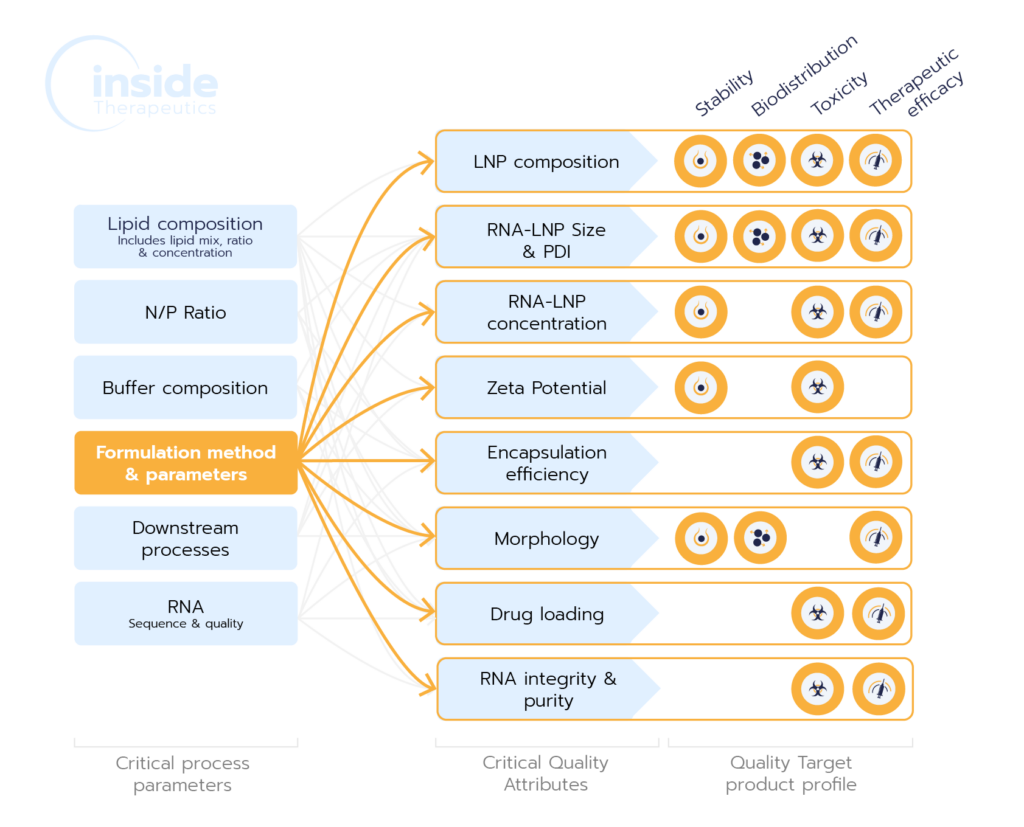
Figure 2 – Same composition. Different mixing process. Potentially different nanoparticle attributes.
The moment the mixing changes, key critical quality attributes (CQAs) — including size, encapsulation efficiency, internal structure… — change with it. In turn this affect how the particle behaves in vivo: biodistribution, efficacy, toxicity. [1,2]
Every technology or platform switch means:
- Re-optimizing a formulation that already worked
- Re-validating its CQAs
- Re-proving its biological performance
All of this while the field is still working out which CQAs matter and how to measure them: the impact of morphology or per-particle loading on performance remains an open question [1,2].
You can’t scale what you can’t reproduce.
When you transition from preclinical small scale to large scale,“you have to switch the mixing technologies, which costs time and money. You have to make sure that when you’ve changed the manufacturing process, you haven’t changed the drug itself — the nanoparticle, or how much of the mRNA gets into the LNP. It has to be the same.”
Alexander Aust, LNP Consultant – PharmaSource Podcast
Scale the volume. Keep the mixing mechanism.
Hold the mixing constant at every volume and the RNA-LNP you validate is the one you manufacture — not a look-alike that happens to share the same number on a DLS report.
Guaranteed by identical mixing from µL to production, not recovered through re-optimization at each scale.

Figure 3 – One mechanism, held identical from µL to L.
Each mixing technology fits a different phase.
NanoPulse spans them all.
Microfluidic mixing and impingement jet mixing (IJM) are the two main technologies for RNA-LNP formulation, but each is built for a different operating range.
Microfluidic mixers give excellent control at low volume through laminar flow control, which makes them perfectly suited to R&D work. At larger scale, channel size caps their throughput, and long runs can clog as lipids tend to stick together, agglomerate on the walls and build up. Enlarging the channels doesn’t solve it: it lengthens diffusion distances and changes the mixing itself to non-laminar mixing.
Jet mixers (impingement jet or T-mixers) deliver production throughput, but not the small volumes screening needs: they need high flow rates to mix efficiently and carry large dead volumes. Also they are stuck at FRR of 1:1. Scaling them up means changing hardware, and no scaling rule, whether Reynolds number or jet velocity, holds every local mixing condition constant.
Either way, moving across scales means changing the mixer, its operating conditions or the equipment, then re-optimizing and re-validating the formulation at each step. The bulk measurements used to do so, such as size, PDI and EE%, can miss differences in internal structure and payload loading, and with them in biological performance.
Every transfer is a risk that analytics alone cannot rule out.
NanoPULSE takes a different approach: by keeping the identical mixing mechanism from screening to continuous production, it keeps exactly the same LNP quality attributes.
Table 1 – Microfluidics gives fine control at low volume but hits a ceiling at production scale (clogging, throughput, impractical scale-out). Jet mixers are built for production volumes but are unsuitable for screening. NanoPulse is designed to bridge them: fit across every stage, and the same particle throughout.

High-frequency pulses drive
controlled nanoparticle formation
NanoPulse relies on the sequential injection of the acqueous and organic phases at high frequency into a common flow path. Each pulse injects a defined volume of one phase, then the other, in immediate succession.
As these pulses travel downstream, the repeated interfaces between the two phases promote rapid mixing. The resulting solvent exchange creates the conditions for self-assembly of the lipid components and RNA payload into nanoparticles.
Because each pulse is generated through the same controlled injection sequence, the same underlying mixing mechanism is repeated throughout the process — providing consistent conditions for RNA-LNP formation.
Same conditions, same nanoparticles — reproducibility that doesn’t depend on batch size.

Figure 4 – (1) Sequential injection. The aqueous and organic phases are injected alternately. (2) Pulse-driven mixing. Alternating pulses create repeated phase interfaces, driving rapid mixing and solvent exchange. (3) Nanoparticle formation. Controlled mixing conditions drive reproducible RNA-LNP self-assembly.

Efficient mixing
The parabolic flow profile generated by each fringe drives dispersion, enhancing mixing efficiency and enabling consistent, high-quality LNP formation.
Consistent mixing
Every pulse sees the same local conditions, so mixing is identical whether you run one pulse or millions — the same particle at every scale.
Self-cleaning by design
NanoPulse’s simple structure and pulsatile flow prevents material build-up on the channel walls, eliminating fouling and ensuring stable nanoparticle quality over extended continuous production.
Controlling nanoparticle formation
Injection frequency – main parameter to tune particle size; higher frequency, faster mixing, smaller LNPs
Flow rate ratio (FRR) – sets aqueous-to-organic phase ratio
Total flow rate (TFR) – sets process throughput


One process. Multiple payloads and lipid compositions.
The same frequency-driven process supports controlled RNA-LNP formation across different RNA payloads (mRNA, saRNA) and ionizable lipids (ALC-0315, SM-102, C12-200).
Table 2 – Lipid composition and molar ratios of mRNA-LNP formulations.
| SM-102 | ALC-0315 | C12-200 | |
|---|---|---|---|
| Ionizable lipid | SM-102 (50%) | ALC-0315 (46.3%) | C12-200 (46.5%) |
| Phospholipid | DSPC (10%) | DSPC (9.4%) | DSPC (16%) |
| Sterol | Cholesterol (38.5%) | Cholesterol (42.7%) | Cholesterol (35%) |
| PEG-lipid | MPEG-2000-DMG (1.5%) | ALC-0159 (1.6%) | MPEG-2000-DMG (2.5%) |
Change the cargo or the lipid mix; keep the underlying mixing principle the same.


Matches the performance of microfluidics-formulated LNPs — in vitro and in vivo.
NanoPulse-formulated RNA-LNPs were compared with those produced using a benchmark herringbone mixer.
In vitro, mRNA- and saRNA-LNPs show similar transfection, protein expression and cell viability to the microfluidic reference. This highlights the low-shear-stress, yet rapid, mixing process, which preserves the integrity of the most sensitive RNAs.
In vivo, mRNA-LNPs formulated with either SM-102 or ALC-0315 show comparable expression profiles in mice over 30 days.


Consistent RNA-LNP CQAs as volume increases
Formulated with the same parameters, NanoPulse maintains key physicochemical attributes as formulation volume increases, with same biological performance across the tested volumes — without scale-specific re-optimization.
The particle stays consistent. Its biological performance does too.
Multi-liter continuous production. No drift in CQAs.
The same underlying mixing mechanism runs continuously without drifting, maintaining stable particle attributes throughout a multi-liter (4 L+) batch.
Small-scale and large-scale aren’t two processes bridged by a transfer study; they’re the same process, run for longer.
Same mixing mechanism. Longer run. More volume.

References
[1] T. Bethiana et al., “Identifying differential effects from eleven mixing techniques on mRNA lipid nanoparticle physicochemistry and biological performance,” Nov. 09, 2025. doi: 10.1101/2025.11.07.687311.
[2] Y. Mo and G. Zheng, “From Morphology to Mechanism: Cryo-Electron Microscopy Insights into Lipid Nanoparticles for RNA Delivery,” ACS Nano, vol. 20, no. 28, pp. 19906–19929, Jul. 2026, doi: 10.1021/ACSNANO.6C09354.
Ready to discover NanoPulse?
Book your personalized demo or talk to one of our experts!
Response within 24 hours. Your data is secure & never shared