


Book a demo
Tell us about your nanoparticle or RNA project and request Ntensify® micro and mini demo
Our team will get back to you shortly to schedule your session.
Loading specific message...
Contact
Any inquiries about RNA synthesis systems?
Drop us a line!
Loading specific message...

Contact
Any inquiries about your nanoparticle/RNA-LNP formulation?
Drop us a line!
Loading specific message...

Contact
Any inquiries about your nanoparticle/RNA-LNP formulation?
Drop us a line!
Loading specific message...
Book a demo
Tell us about your nanoparticle or RNA-LNP project and request a TAMARA demonstration.
Our team will get back to you shortly to schedule your session.
Loading specific message...
Home Resources Application notes
Perfluorocarbon nanodroplet production with TAMARA
Abstract
Perfluorocarbon (PFC) nanodroplets are emerging as promising ultrasound-responsive phase-change contrast agents that enable acoustically triggered vaporization for imaging and therapy. Their successful clinical translation requires maintaining a precise sub-micron diameter (ideally below 400 nm) to allow for effective tumor extravasation. While traditional nanodroplet fabrication methods like bulk emulsification often struggle with high polydispersity and poor batch-to-batch reproducibility, microfluidic techniques offer precise control over droplet size and formulation, ensuring highly monodisperse populations with excellent reproducibility. This study evaluates the TAMARA Nanoparticle Formulation System as a robust platform for lipid-shelled nanodroplet production.
We evaluate the impact of process parameters like Flow Rate Ratio (FRR) and Total Flow Rate (TFR) as well as formulation parameters including lipid concentration and perfluorocarbon core type and concentration on nanodroplet size, polydispersity, and vaporization behavior. We demonstrate that the TAMARA system enables precise control over nanodroplet size and composition while continuously maintaining high monodispersity (PDI ≤ 0.2). Furthermore, we show that it allows for the tuning of Acoustic Droplet Vaporization (ADV) thresholds by adjusting mixed-core PFC ratios. Ultimately, these findings demonstrate that the TAMARA system is a highly reliable and versatile platform that enables the rational design of perfluorocarbon nanodroplets through precise control over their size, composition, and vaporization behavior.
An efficient platform for generating monodisperse nanodroplets with tunable composition for systematic acoustic droplet vaporization studies.
Introduction
Perfluorocarbon (PFC) nanodroplets (NDs) are submicron, ultrasound-responsive particles that can undergo acoustically triggered phase transitions for diagnostic and therapeutic applications. These liquid-core particles are typically stabilized by a lipid shell and exhibit high stability, long circulation times, and the ability to extravasate from the vasculature, enabling accumulation in diseased tissues. PFCs are particularly well suited for this application: they are chemically inert, biologically well tolerated, and poorly water-soluble, with a wide range of boiling points governing the vaporization behavior.
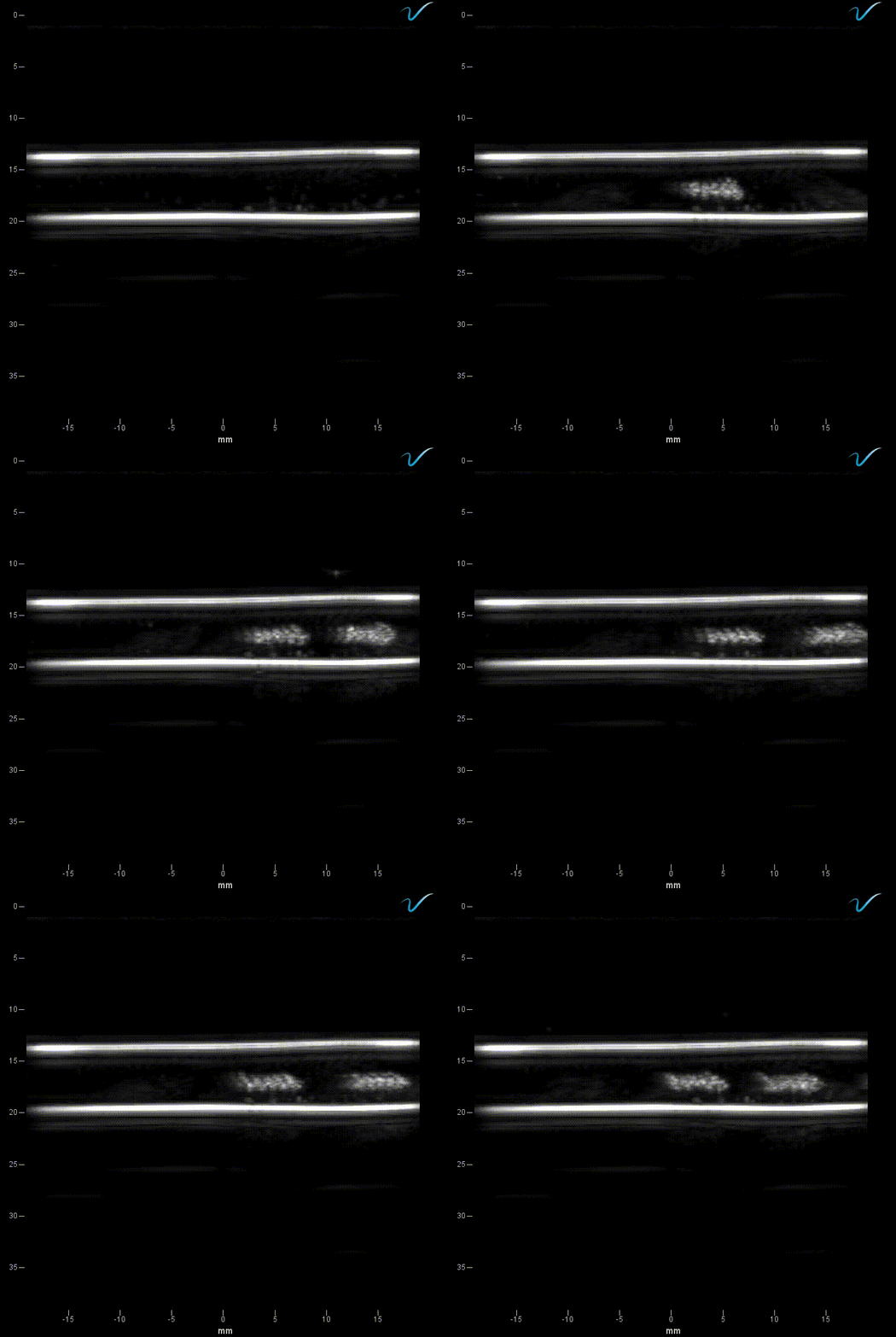
A defining feature of NDs is their ability to undergo Acoustic Droplet Vaporization (ADV), a phase-change process in which the liquid PFC core transitions into an echogenic gas bubble once a negative-pressure threshold is reached. Below this vaporization threshold (Figure 1A), NDs remain ultrasonically stable with minimal acoustic contrast, yet they can be selectively vaporized at the location of interest (Figure 1B). This on-demand activation enables spatially and temporally controlled imaging, localized drug release, and other advanced therapeutic interventions [1]. Accordingly, NDs are being explored for applications such as tumor imaging, sonothrombolysis, sonoporation, and transient opening of the blood–brain barrier, highlighting their potential as a versatile tool for ultrasound-guided diagnostics and therapy. The ADV threshold is a critical parameter for evaluating droplet performance and predicting in vivo feasibility, as vaporization must occur at physiologically relevant pressures for clinical translation. However, reported ADV thresholds vary widely across studies, reflecting differences in formulation, experimental setups, and threshold definitions, which complicates quantitative comparison and rational ND design [2].

Figure 1: B-mode images of PFC nanodroplets circulating within a tube (delimited by the two white parallel lines) (A) before and (B) after reaching the acoustic pressure threshold for vaporization. Nanodroplets are stable and non-echogenic prior to vaporization; following vaporization, the formation of echogenic gas bubbles produces a localized echogenic signal.
Various ND fabrication strategies have been explored, including condensation-based approaches [3] and bulk emulsification techniques such as high-speed mechanical agitation, high-pressure homogenization [4], and sonication [5]. Each approach presents trade-offs in terms of cost, yield, polydispersity, batch-to-batch reproducibility, processing conditions, and ease of use. Precise control over ND size is critical for predictable pharmacokinetics and consistent responses to ultrasound, where avoiding size-dependent variability helps yield a more uniform vaporization transition [6]. Additionally, tailoring the diameter to be smaller than the spontaneously forming inter-endothelial gaps is essential for enabling extravasation. This allows the droplets to accumulate within target tissues for effective molecular imaging. Microfluidic techniques have emerged as a promising alternative production method, as they offer precise control over droplet size and formulation, ensuring highly monodisperse populations with excellent reproducibility [7]. Furthermore, they show potential for continuous production and scale-up. Ultimately, successful clinical translation of ND production methods will require balancing precision (monodispersity, tunability), reliability (reproducibility, stability, safety), and practicality (scalability, cost, regulatory feasibility).
In this work, we employ the TAMARA Nanoparticle Formulation System, which operates on the principle of nanoprecipitation via microfluidic mixing, to evaluate how process and formulation parameters affect key ND properties, specifically size and polydispersity index (PDI). Using these highly monodisperse NDs, we then modulate ADV thresholds by adjusting the mixing ratio of PFC core species (C5F12 and C6F14). Ultimately, this work provides a practical guide for using the TAMARA system to produce perfluorocarbon NDs with target sizes and predictable ultrasound activation pressures.
This application note is based on work carried out at ETH Zurich in collaboration with Bracco Suisse SA and supported by Inside Therapeutics. A complete description of this study has been published in Ultrasound in Medicine & Biology by Oberhuber et al. [8].
Results
1/ Tuning PFC ND properties using process and formulation parameters
1.A/ Impact of process parameters
As a first step, process parameters associated with the microfluidic system, namely FRR and TFR, were explored to determine how various flow conditions affect the size distribution of the NDs. As shown in Figure 2A, increasing the FRR from 2:1 to 10:1 progressively reduces ND size. A possible explanation for this trend is that a higher proportion of the aqueous phase induces more rapid dilution of the ethanol stream, triggering a faster transition to a supersaturated state for the PFC and the lipids. This promotes a nucleation “burst” that distributes available material across a larger number of nuclei, thereby limiting individual droplet growth. Similarly, increasing the TFR from 2 to 10 mL/min also results in the formation of smaller NDs (Figure 2B), which is consistent with previous reports attributing this trend to increased shear stress within the staggered herringbone mixer at higher flow rates.
![Figure 2: Size and PDI of microfluidically produced PFH NDs depending on the (A) flow rate ratio (aq:org) and (B) total flow rate. Each data point represents the mean ± standard deviation of three independent replicates. Adapted from Oberhuber et al. [8] under CC BY 4.0.](https://insidetx.com/wp-content/uploads/2026/10/Figure2_PFC-NDs-1024x310.png)
Figure 2: Size and PDI of microfluidically produced PFH NDs depending on the (A) flow rate ratio (aq:org) and (B) total flow rate. Each data point represents the mean ± standard deviation of three independent replicates. Adapted from Oberhuber et al. [8] under CC BY 4.0.
1.B/ Impact of formulation parameters
Regarding formulation parameters, Figure 3A illustrates that increasing the lipid concentration reduces PFH ND size, likely because greater lipid availability enables faster interfacial coverage of smaller PFC cores, thereby decreasing the probability of coalescence during emulsification. Conversely, ND diameter increased with increasing PFC content, both for perfluoropentane (PFP) and perfluorohexane (PFH) (Figure 3B). This trend likely reflects the larger volume of hydrophobic core material relative to a fixed lipid concentration, as the limited lipid availability leads the system to minimize total surface area by forming larger droplets to accommodate the additional PFC during droplet formation. Higher PFC concentrations than those shown in Figure 3B could not be tested, as the solubility limit of PFCs in ethanol is reached around 20 µL/mL.
![Figure 3: Size and PDI of microfluidically produced NDs depending on (A) lipid concentration for PFH NDs and (B) perfluorocarbon concentration for PFP and PFH NDs, where the 0 μL/mL PFC condition corresponds to lipid-based nanoparticles without a PFC core, i.e., liposomes. Each data point represents the mean ± standard deviation of three independent replicates. Adapted from Oberhuber et al. [8] under CC BY 4.0.](https://insidetx.com/wp-content/uploads/2026/10/Figure3_PFC-NDs-1024x298.png)
Figure 3: Size and PDI of microfluidically produced NDs depending on (A) lipid concentration for PFH NDs and (B) perfluorocarbon concentration for PFP and PFH NDs, where the 0 μL/mL PFC condition corresponds to lipid-based nanoparticles without a PFC core, i.e., liposomes. Each data point represents the mean ± standard deviation of three independent replicates. Adapted from Oberhuber et al. [8] under CC BY 4.0.
1.C/ Characterization of perfluorocarbon nanodroplets
Following production, the resulting NDs were characterized using several independent techniques. Nanoparticle tracking analysis revealed highly reproducible ND concentrations across batches, with typical yields of 6-8 x 10¹⁰ NDs/mL for both PFP and PFH formulations (Figure 4A). Cryo-TEM imaging confirmed the structural integrity of the droplets and a spherical morphology with a darker, more opaque center resulting from the high electron density of the liquid PFC core (Figure 4B). Furthermore, fluorescence confocal microscopy of Cy3-labeled NDs demonstrated a consistent dye distribution across the population (Figure 4C).
![Figure 4: (A) Typical ND concentrations achieved for PFP and PFH droplets for three independent replicates as measured using a NanoSight NS500. (B) Representative cryo-TEM image of a PFP ND. (C) Representative confocal fluorescence image of Cy3-labeled NDs. Adapted from Oberhuber et al. [8] under CC BY 4.0.](https://insidetx.com/wp-content/uploads/2026/10/Figure4_PFC-NDs-1024x304.png)
Figure 4: (A) Typical ND concentrations achieved for PFP and PFH droplets for three independent replicates as measured using a NanoSight NS500. (B) Representative cryo-TEM image of a PFP ND. (C) Representative confocal fluorescence image of Cy3-labeled NDs. Adapted from Oberhuber et al. [8] under CC BY 4.0.
2/ Influence of PFC core composition on nanodroplet vaporization behavior
We further examined the relationship between ND formulation and vaporization behavior using droplets with mean diameters of 200 nm to determine if the TAMARA system enables control over ADV thresholds at the production stage. The acoustic behavior of NDs can be precisely tuned by manipulating the core composition. Lower-boiling-point perfluorocarbon cores exhibit lower acoustic activation thresholds, with PFP (boiling point 28-30 °C) vaporizing at lower pressures than PFH (boiling point 58-60 °C), demonstrating a direct relationship between PFC boiling point and ADV threshold. In general, lower boiling points and higher vapor pressures reduce the acoustic energy required to overcome the liquid–gas phase barrier, confirming that core volatility is a dominant determinant of ADV behavior. While pure PFC cores (e.g., PFP or PFH) provide discrete vaporization thresholds governed by their intrinsic boiling points, mixed PFC cores enable continuous tuning of the ADV threshold. As shown in Figure 5, the ADV threshold can be shifted progressively by varying the ratio of PFP and PFH. To accurately capture this behavior, four ADV threshold definitions were utilized to represent different stages of the vaporization process:
- TBI (tangent-baseline intersection) and BSR (bootstrapped segmented regression): Identify the activation onset, marking the earliest pressure at which droplets begin to vaporize.
- P80 (pressure at 80% activation): Denotes near-complete activation, or the pressure required to reach 80% vaporization.
- P50 (inflection point method): Identifies the midpoint of activation, representing the pressure at which the majority of the population transitions.
Regardless of the specific metric applied, the trend remains consistent: as the fraction of higher-boiling-point PFH increased in PFP:PFH mixtures, the ADV threshold progressively shifted to higher pressures. These results highlight that the TAMARA system serves as a versatile platform, providing the precise compositional control necessary to produce complex, mixed-core formulations. This allows the acoustic behavior of the NDs to be tuned at the formulation stage to meet specific experimental requirements.
![Figure 5: Influence of core composition on ND vaporization behavior. Sigmoid activation curves and resulting ADV thresholds are shown for various PFP:PFH ratios. Adapted from Oberhuber et al. [8] under CC BY 4.0.](https://insidetx.com/wp-content/uploads/2026/10/Figure5_PFC-NDs.png)
Figure 5: Influence of core composition on ND vaporization behavior. Sigmoid activation curves and resulting ADV thresholds are shown for various PFP:PFH ratios. Adapted from Oberhuber et al. [8] under CC BY 4.0.
Discussion
In this study, we demonstrate the robust and reproducible microfluidic production of monodisperse lipid-shelled PFC NDs with tunable size and composition using the TAMARA system. While microfluidics has been used before to produce PFC NDs, the TAMARA platform addresses practical bottlenecks like cost, material waste, and reproducibility that typically complicate the systematic screening of new ND formulations.
With TAMARA, PDIs remained consistently low (≤ 0.2) with minimal variation between independent replicates across all tested conditions. By modulating process parameters, specifically the TFR and FRR, we achieved predictable control over droplet diameter. Altogether, these results demonstrate the robustness of microfluidic ND production, where controlling process and formulation parameters enables reproducible and tunable control over ND size, while yields remain consistently high across batches.
The ability to produce NDs with different PFC cores (PFB, PFP, PFH) as well as stable, mixed-core populations using different ratios of PFP and PFH highlights the versatility of the TAMARA platform for developing phase-change contrast agents. As demonstrated in the results, the system allows for the precise modulation of PFC core composition, which in turn enables the systematic tuning of ADV thresholds. This capability is particularly useful for acoustic characterization studies, where identifying the specific relationship between formulation parameters and vaporization behavior is of interest.
Beyond the physical quality of the droplets, the TAMARA system offers practical advantages for experimental workflows. The use of reusable chips and low required sample volumes reduces material consumption per experiment compared to other fabrication techniques. Ultimately, the system’s reproducibility and tunability allows for the systematic study of different formulations for the development of ultrasound-responsive phase-change contrast agents.
Conclusion
In summary, the TAMARA system demonstrates robust and reproducible microfluidic production of monodisperse lipid-shelled perfluorocarbon NDs with tunable size and composition, serving as a well-controlled experimental basis for investigating their vaporization behavior. While providing superior size control and monodispersity compared to traditional bulk emulsification methods, the platform also overcomes the throughput and cost limitations often associated with other microfluidic setups. Ultimately, this enables fast, highly reproducible screening of diverse ND formulations to easily optimize acoustic vaporization thresholds, significantly expanding the accessibility of phase-change contrast agent research.
Materials & methods
1/ Production of perfluorocarbon nanodroplets
PFC NDs were formulated via microfluidic mixing using the TAMARA Nanoparticle Formulation System. The TAMARA offers two microfluidic mixing approaches within one chip that the user can select at will: a staggered herringbone mixer and a baffle mixer. Throughout this entire study, the herringbone mixer was employed. Thus, the instrument uses pressure-controlled flow through a microfluidic chip containing the staggered herringbone micromixer, which enhances mixing via the generation of transverse micro-vortices under laminar flow between two solutions.
The aqueous phase (ultrapure water) was introduced through one inlet of the cartridge, while the organic phase – composed of PFC and phospholipids dissolved in ethanol – was injected through the second inlet. Limited PFC solubility in ethanol, combined with rapid mixing with water, drives the solution past the solubility limit, inducing nucleation of nanoscale PFC droplets. Simultaneously, ethanol dilution also decreases phospholipid solubility, triggering nanoprecipitation and self-assembly at the PFC-water interface.
The microfluidic settings, namely total flow rate (TFR) and flow rate ratio (FRR) were systematically varied to control ND properties. For investigating the effects of production parameters on ND size, NDs were produced with a PFH core, unless otherwise stated. Production parameters were systematically varied, including FRR (aq:org, 2:1–10:1), TFR (2–10 mL/min), lipid concentration (1–5 mg/mL, DPPC:DSPE-mPEG2000, 9:1 molar ratio), as well as PFC concentration (0–20 µL/mL for both PFP and PFH). For ADV studies, NDs were produced at a TFR of 2 mL/min, a FRR of 2:1, a lipid concentration of 4 mg/mL (DPPC:DSPE-mPEG2000, 9:1 molar ratio), and a PFC concentration of 10 µL/mL. Immediately after collection, the ND dispersion was diluted fourfold with ice-cold ultrapure water and stored at 4 °C. All solutions and the collection vial were kept on ice throughout production to minimize PFC evaporation. Fluorescently labelled NDs were prepared using a lipid composition of 90 mol% DPPC, 2 mol% DSPE-mPEG2k, and 8 mol% DSPE-mPEG5k-sCy3. Between runs, the chips were thoroughly cleaned using TAMARA’s integrated cleaning function, ensuring consistent performance and repeatability.
2/ Characterization of perfluorocarbon nanodroplets
The Z-average diameter (intensity weighted mean hydrodynamic size) and polydispersity index (PDI) of NDs were measured via dynamic light scattering (DLS) using an Anton Paar Litesizer 500 (Anton Paar, Graz, Austria) immediately after ND production. Samples were diluted 10-fold in ultrapure water, and three technical replicates were measured for each sample in 1.5 mL polystyrene cuvettes at 25 °C using backward scattering (175°). The ND suspension was considered monodisperse when its PDI was below 0.2.
Nanoparticle tracking analysis (NTA) was conducted to quantify ND concentration using a NanoSight NS500 (Malvern Panalytical, Malvern, UK) equipped with a syringe pump. Samples were diluted 1:100 in ultrapure water and infused at a constant flow rate of 3 µL/s. For each replicate, five 60-s videos were recorded and analyzed using the NanoSight NTA software (version 3.4), with automatic drift correction enabled.
An inverted spinning-disk confocal microscope (Nikon Eclipse Ti2 microscope, Nikon Instruments, Tokyo, Japan) was used to assess ND morphology and shell-labeling efficiency. A volume of 10 µL of NDs was diluted in 500 µL of 50:50 (v/v) PBS:glycerol to increase viscosity and thereby reduce Brownian motion, deposited on a glass slide, and covered with a coverslip. Images were acquired using a 100x oil immersion objective and processed using Fiji (ImageJ, v2.16.0).
Fabricated NDs were also visualized and characterized by cryogenic transmission electron microscopy (cryo-TEM) using a Titan Krios (Thermo Fisher Scientific) operated at 300 kV. Samples were concentrated by centrifugation (6 mL NDs, 6000 g, 15 min, 4 °C), and the pellet was resuspended in 500 µL of 1% trehalose solution. NDs were then applied to glow-discharged (Pelco Easy Glow, negative 25 mA for 30s) lacey carbon grids, blotted for 2 s at 100 % humidity and 22 °C, and vitrified in liquid ethane using a Vitrobot Mark IV (Thermo Fisher Scientific). Micrographs were acquired at a cumulative electron dose of approximately 30 electrons per Å2 and a defocus of -3 µm using a Thermo Fisher Scientific Falcon 3 direct electron detector operated in integration mode.
3/ Vaporization of perfluorocarbon nanodroplets
Acoustic droplet vaporization was assessed in a custom-built flow system with NDs circulated through a dialysis tube submerged in a temperature-controlled water bath (37 °C). Ultrasound imaging and vaporization were performed using a programmable ultrasound research system (Vantage NXT128, Verasonics) with an L11-5v linear array transducer, controlled via MATLAB. The resulting vaporization curves were analyzed using four commonly applied ADV threshold definitions: two onset-based (TBI: tangent-baseline intersection, BSR: bootstrapped segmented regression) and two population-based (P80: pressure at 80% activation, P50: inflection point method) metrics. For more details regarding the acoustic measurements, the data processing, and the ADV threshold definitions, please refer to Oberhuber et al., 2026 [8].
Copyright & attribution
This application note contains content adapted from Oberhuber et al. [8], published in Ultrasound in Medicine & Biology under the Creative Commons Attribution 4.0 International (CC BY 4.0) license. Text and figures have been adapted and/or shortened from the original publication. Changes were made to content and formatting for the application note format.
References
[1] H. Lea-Banks, M. A. O’Reilly, and K. Hynynen, “Ultrasound-responsive droplets for therapy: A review,” Journal of Controlled Release, vol. 293, pp. 144–154, Jan. 2019, doi: 10.1016/j.jconrel.2018.11.028.
[2] M. Dorvashi et al., “A meta-analysis of the effect of ultrasound activation parameters on phase-change nanodroplets in imaging and therapy,” Frontiers in Acoustics, vol. 2, p. 1483731, Nov. 2024, doi: 10.3389/facou.2024.1483731.
[3] P. S. Sheeran, S. Luois, P. A. Dayton, and T. O. Matsunaga, “Formulation and acoustic studies of a new phase-shift agent for diagnostic and therapeutic ultrasound,” Langmuir, vol. 27, no. 17, pp. 10412–10420, Sep. 2011, doi: 10.1021/la2013705.
[4] N. Reznik, R. Williams, and P. N. Burns, “Investigation of Vaporized Submicron Perfluorocarbon Droplets as an Ultrasound Contrast Agent,” Ultrasound Med. Biol., vol. 37, no. 8, pp. 1271–1279, Aug. 2011, doi: 10.1016/j.ultrasmedbio.2011.05.001.
[5] P. Zhang and T. Porter, “An in vitro study of a phase-shift nanoemulsion: A potential nucleation agent for bubble-enhanced HIFU tumor ablation,” Ultrasound Med. Biol., vol. 36, no. 11, pp. 1856–1866, Nov. 2010, doi: 10.1016/j.ultrasmedbio.2010.07.001.
[6] T. D. Martz, P. S. Sheeran, D. Bardin, A. P. Lee, and P. A. Dayton, “Precision Manufacture of Phase-Change Perfluorocarbon Droplets Using Microfluidics,” Ultrasound Med. Biol., vol. 37, no. 11, pp. 1952–1957, Nov. 2011, doi: 10.1016/j.ultrasmedbio.2011.08.012.
[7] R. Melich et al., “Microfluidic preparation of various perfluorocarbon nanodroplets: Characterization and determination of acoustic droplet vaporization (ADV) threshold,” Int. J. Pharm., vol. 587, p. 119651, Sep. 2020, doi: 10.1016/j.ijpharm.2020.119651.
[8] I. Oberhuber et al., “Beyond a Single ADV Threshold: Toward Reproducible Production and Comprehensive Acoustic Characterization of Perfluorocarbon Nanodroplets,” Ultrasound Med. Biol., 2026, doi: 10.1016/j.ultrasmedbio.2026.07.001.

Looking to get started or improve your LNP formulation screening?
Reach out to us to discover how we can help!
Other Application notes
Looking for more detailed application notes on nanoparticle formulations? Check out our other resources!
See all Application notes

Integrating High-Purity mRNA Synthesis and Scalable LNP Formulation: AMCAP™ and TAMARA for RNA-LNP Development
Read more
From microfluidic formulation to payload quantification: TAMARA and CloudSpec for RNA-LNP development
Read more
In vivo evaluation of standard mRNA-LNP formulations produced with TAMARA
Read more
In vivo evaluation of mRNA-LNP vaccines formulated using TAMARA
Read more
Benchmarking LNP vs Electroporation for eGFP RNA and CRISPR-Cas9 Delivery in HSCs
Read more
